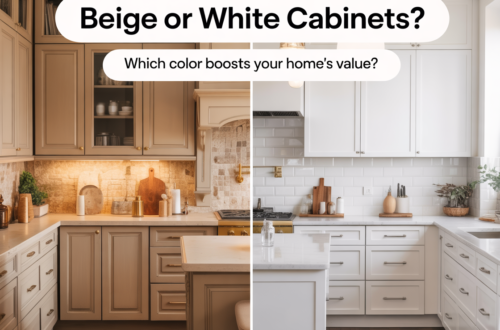
There’s a house on my street that got renovated about eight years ago. The owners went all-in on the white kitchen trend — white cabinets, white countertops, white subway tile, white everything. It looked incredible in photos. In person, it always felt a little sterile. Like a kitchen designed to be photographed rather than cooked in.
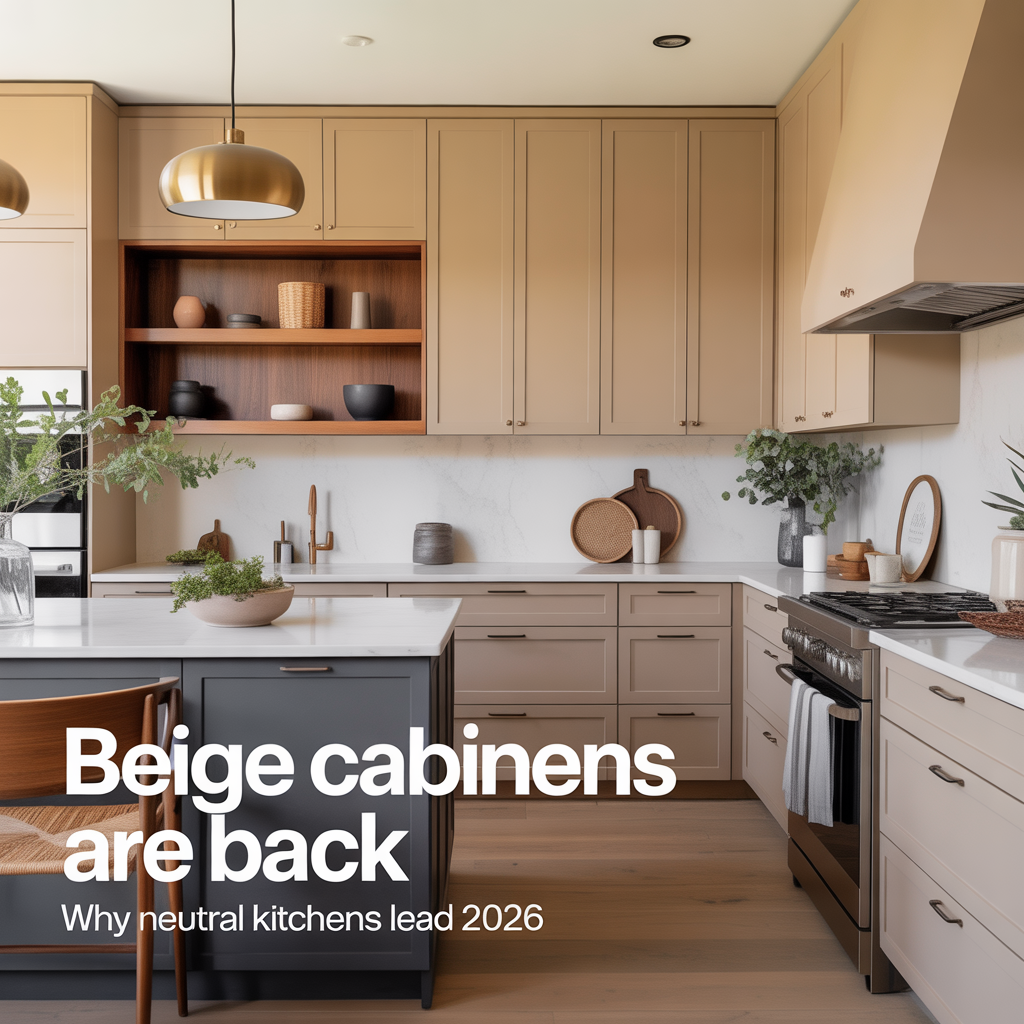
Last year they repainted the cabinets. Warm beige. The kitchen now looks like a place where people actually live.
That shift — from clinical white to warm, livable beige — is happening in kitchens everywhere right now. And it’s not a passing trend. It’s a correction.
What happened to white kitchens
White kitchens had a long run. Through most of the 2010s, they were the default choice for anyone renovating — safe, resale-friendly, photogenic. Instagram made them everywhere. Pinterest boards were wall-to-wall bright white cabinetry with marble countertops and nothing out of place.
The problem is that white kitchens require constant maintenance to stay looking the way they do in photos. Fingerprints show immediately. Cooking stains are visible on cabinet fronts. Yellowing happens over time, especially near the stove. And the brightness that looks so clean in a photo can feel harsh and flat in a real kitchen with real lighting and real meals being made.
People started getting tired of maintaining a kitchen that looked like it belonged in a showroom. They wanted something warmer. Something that could handle daily life without looking like it was failing every time someone touched a cabinet door.
Beige solves all of that.
Why beige works so well in a kitchen
Beige is warm in a way white never quite manages. It reads as neutral but it carries undertones — sometimes yellow, sometimes pink, sometimes gray — that make it feel alive rather than blank. In a kitchen, where you want the space to feel welcoming and comfortable, that warmth matters.
It also pairs with almost everything. Beige cabinets work with wood countertops, stone countertops, dark granite, light quartz, butcher block. They work with brass hardware, matte black hardware, brushed nickel. They work with warm-toned flooring and cool-toned flooring. White cabinets are actually more restrictive — the wrong countertop or floor tone makes the whole kitchen look off. Beige is far more forgiving.
And practically speaking, beige hides the evidence of daily life better than white. Light smudges, minor splashes, the general patina of a kitchen being used — all of it is far less visible on a warm beige surface than on a bright white one. It’s not that beige is dirty. It’s that it doesn’t announce every imperfection.
The design world caught up first
Interior designers started moving away from stark white kitchens a few years before the general public noticed. Trade publications and high-end renovation projects began showing up with cabinet colors described as “greige,” “warm white,” “linen,” “cream,” and “sand” — all of which are, in plain language, variations of beige.
The language shifted before the visual did. Designers knew that “beige” carried baggage from the 1990s — association with dated, builder-grade interiors that nobody wanted to reference. So they renamed it. Warm neutrals. Organic tones. Earth-adjacent hues. All beige. All making a quiet comeback in high-end kitchens years before it filtered into mainstream renovation choices.
By 2025, paint companies were reporting sharp increases in sales of warm neutral cabinet colors. Benjamin Moore’s warm whites and soft beiges were consistently outselling their cooler counterparts. Sherwin-Williams named warm, earthy tones as central to their color direction year after year. The design world wasn’t predicting beige’s comeback — it was already in the middle of it.
What’s driving it in 2026 specifically
A few things converged this year that pushed beige from a quiet trend to a full-on movement.
The first is the broader shift toward warmth in interiors generally. After years of minimalism — cold surfaces, gray everything, industrial fixtures — people want their homes to feel soft and human again. Beige is part of that. So are natural wood tones, linen textures, terracotta accents, and anything that references the natural world rather than a tech office.
The second is the backlash against gray. Gray kitchens had their moment after white — slightly warmer than stark white, still neutral, felt fresh for a few years. Then they started to feel cold and dated faster than anyone expected. Beige is what comes after gray when you still want neutral but you want it to feel alive.
The third is practical. Kitchen renovation costs have gone up significantly. People who might have done a full cabinet replacement a few years ago are now painting their existing cabinets instead. Beige is the color most commonly chosen for that kind of refresh — it works with existing hardware in most kitchens, it covers previous colors cleanly, and it immediately updates the feel of the space without requiring a complete overhaul.
Not all beige is the same
This is worth understanding before you commit to anything. Beige is a family of colors, not a single shade, and the undertones vary enormously. Some beiges lean pink — beautiful in some kitchens, clashing in others. Some lean yellow — warm and sunny, but potentially overwhelming with the wrong countertop. Some lean gray — the so-called greige, cooler and more contemporary.
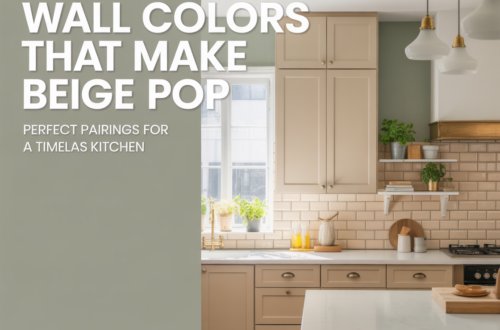
Before choosing a beige for your cabinets, look at your fixed elements: your flooring, your countertops, your backsplash if you have one. A beige with pink undertones in a kitchen with cool gray stone will fight constantly. A warm yellow-beige with wood floors and butcher block counters will feel like everything was designed together.
Get samples. Paint them on a large section of your actual cabinet door — not a small chip held up to the light. Live with it for a few days. Look at it in the morning light, the evening light, with the overhead fixtures on. Beige shifts more than most colors depending on the lighting, and you want to be sure before you commit.
Is it actually a comeback or just a trend
Probably both, in the best way. Beige was always a legitimate choice — it got unfairly maligned during the white kitchen era. What’s happening now isn’t beige being elevated above its natural station. It’s beige returning to where it was always going to end up: as one of the most versatile, livable, and genuinely beautiful choices for kitchen cabinetry.
Trends come and go. Beige in some form has been in kitchens for centuries. It will still be in kitchens when whatever comes after this current wave has had its moment and faded.
The neighbors with the white kitchen figured that out. Their beige kitchen looks better now than it ever did before. More comfortable. More real. More like somewhere you’d actually want to spend time.
That’s what beige does. It makes a kitchen feel like a kitchen.