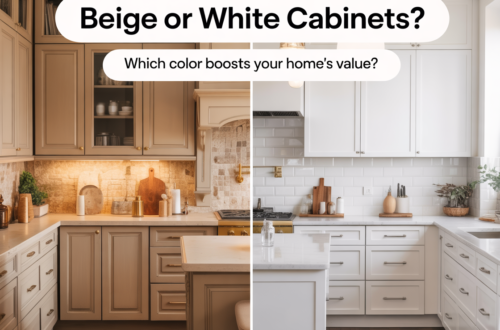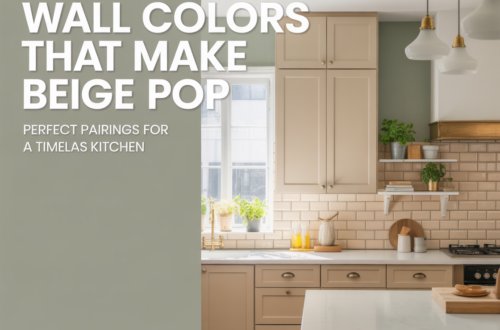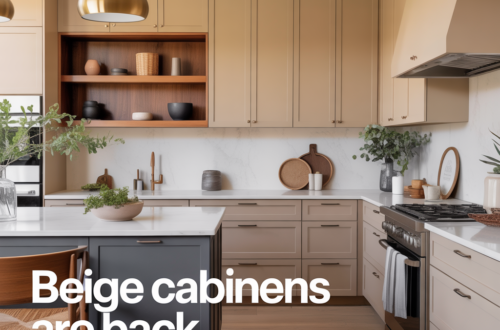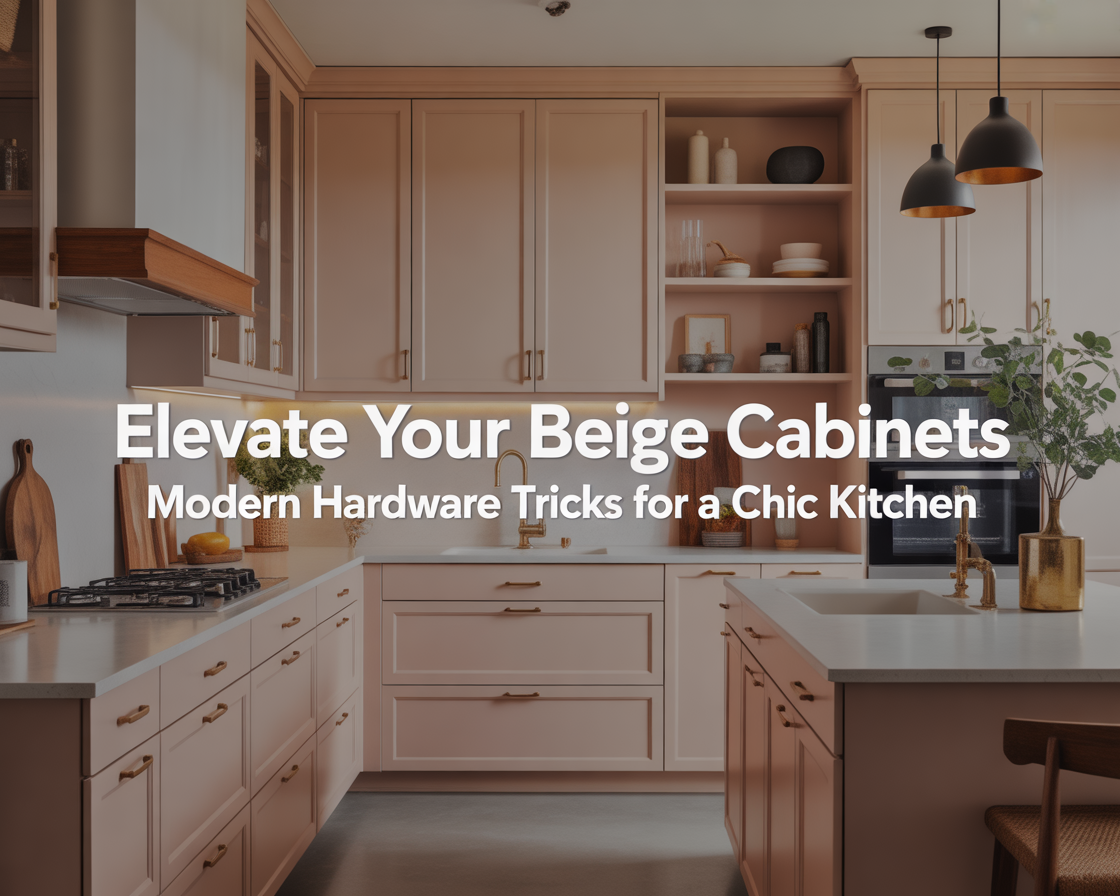
I changed the hardware in my kitchen before I changed anything else. Same beige cabinets, same countertops, same floors. Just swapped out the builder-grade brushed nickel pulls for matte black bar handles. Took about forty minutes with a screwdriver.
People who came over after assumed I had renovated. One person asked if I’d gotten new cabinets. I hadn’t touched the cabinets. Hardware does that — it reframes everything around it so completely that the eye reads the whole kitchen differently.
With beige cabinets specifically, hardware is doing more work than it does in most other kitchens. Beige is warm and quiet by nature. It needs something to give it definition, something to signal that the warmth is intentional rather than just neutral. The right hardware provides exactly that. The wrong hardware makes beige look like a non-decision.
Why hardware matters more with beige than with other colors
Dark cabinets — navy, forest green, charcoal — have enough visual presence to carry a kitchen on their own. The color is doing the heavy lifting. White cabinets lean on brightness and contrast to create their effect. Beige is more subtle than either of those, which means the details around it become more important.
Hardware is the most visible detail in a kitchen. Every cabinet door and drawer has a pull or a knob, repeated across the entire room. When you multiply one handle by twenty, you get a pattern that reads almost like a material — present everywhere, shaping how the whole space feels. With beige cabinets, that pattern either elevates the warmth of the color or undermines it entirely.
The good news is that beige is genuinely versatile. It works with a wider range of hardware finishes than almost any other cabinet color. The challenge is that this versatility can make the choice feel overwhelming. Here’s how to think through it.
Matte black — the sharpest contrast available
Matte black hardware on beige cabinets is the combination that surprises people most and impresses them longest. The contrast is strong but not harsh — beige softens what would be an aggressive pairing on white cabinets. The result is a kitchen that feels modern and considered without feeling cold.
It works because matte black doesn’t reflect light. It sits solidly against the beige, creating a clean line wherever it appears — drawer pulls, cabinet handles, faucet, light fixtures if you carry it through. Consistency is important with matte black. One shiny chrome fixture in a room full of matte black hardware creates a visual hiccup that’s hard to ignore.
The shape of the hardware matters here too. Thin bar pulls in matte black against beige cabinets look architectural and precise. Rounded knobs in matte black look softer and more casual. Both work — but the choice changes the register of the whole kitchen. Bar pulls say modern. Knobs say collected and lived-in.
Brushed brass and unlacquered brass — warmth on warmth
Brass and beige share the same warmth, and that shared quality is exactly what makes them work so well together. Where matte black creates contrast, brass creates harmony. The kitchen feels like it was designed in one key rather than assembled from contrasting parts.
Brushed brass is the easier version — the surface treatment removes the shininess that makes some people hesitant about gold tones, leaving something warmer and more muted. It ages gracefully and works with a wide range of beige undertones, whether your cabinets pull pink, yellow, or gray.
Unlacquered brass is the bolder choice. It starts bright and develops a patina over time — darker in some spots, lighter in others, depending on where and how often it’s touched. Some people find this beautiful, a hardware finish that records the life of the kitchen. Others find it unpredictable and frustrating. If you want your hardware to look the same in five years as it does today, unlacquered brass is not for you. If you like the idea of something that ages and develops character, it’s one of the most distinctive choices available.
Brass in any form pairs especially well with beige cabinets that have yellow or golden undertones. If your beige pulls gray or pink, brass can feel slightly discordant — warm hardware against a cool cabinet color creates a subtle tension that isn’t quite contrast and isn’t quite harmony.
Brushed nickel and satin nickel — the understated middle ground
Brushed nickel is where a lot of builder kitchens land by default, which has given it a slightly generic reputation. Used deliberately, though, it’s a genuinely good hardware finish for beige cabinets — particularly for beige that leans gray or cool.
The key distinction is between brushed nickel that was chosen and brushed nickel that was simply never changed. Original builder hardware in brushed nickel tends to be a particular shape — curved pulls, small knobs, the style that was everywhere in the early 2000s. That shape reads as dated regardless of the finish. Updated brushed nickel hardware in a modern shape — long flat bar pulls, substantial cup pulls, integrated finger pulls — reads as intentional and current.
If your beige cabinets sit in a kitchen with cool-toned stone countertops or stainless steel appliances, brushed nickel creates more cohesion than brass would. It bridges the warmth of the cabinets and the coolness of the other surfaces without trying to force a warm-on-warm palette that the rest of the kitchen can’t support.
Bronze and oil-rubbed bronze — the one that photographs dark
Bronze hardware has a specific quality that makes it particularly suited to beige kitchens that are going for a warm, traditional, or slightly rustic feel. It reads darker than brass, less stark than matte black, and carries an organic quality that feels appropriate next to the earthy warmth of beige.
Oil-rubbed bronze specifically — a darker, slightly mottled finish — works best in kitchens with wood elements: open shelving, wooden countertop sections, exposed beams, or wood floors. The hardware connects the warmth of the cabinets to the warmth of the wood. It would feel heavy in a kitchen that’s otherwise all tile and stone.
One practical note: bronze hardware, particularly oil-rubbed versions, can show fingerprints and wear in ways that other finishes hide better. In a heavily used kitchen, this is worth considering. In a kitchen that sees moderate traffic, it patinas beautifully.
Shape and style: the decision after the finish
Once you’ve chosen your finish, the shape of the hardware determines the personality of the kitchen more than anything else.
Long bar pulls — sometimes called European bar pulls or cabinet pulls — give beige cabinets a clean, horizontal line that reads as distinctly modern. The length of the pull relative to the cabinet door matters. A pull that’s too short for a wide door looks lost. A pull that’s close to the full width of the door looks architectural and deliberate.
Cup pulls — semicircular hardware that you hook your fingers under to open a drawer — work beautifully on beige cabinets, especially on drawers. They add a slight vintage quality that complements beige’s warmth without making the kitchen feel old-fashioned. On drawers specifically, cup pulls feel substantial and satisfying in a way that bar pulls don’t quite replicate.
Knobs on doors, pulls on drawers is a classic rule that exists for good reason. Knobs on wide cabinet doors can feel slightly awkward — you’re pulling something large with a small point of contact. Pulls distribute the force across the door more naturally. That said, all knobs in a kitchen with smaller cabinet doors is a completely legitimate choice and can give a kitchen a more collected, less showroom feel.
Carry the hardware through the whole kitchen
The biggest mistake people make after choosing great cabinet hardware is stopping there. The faucet, the range hood if it has visible hardware, the light fixtures, the cabinet hinges if they’re exposed — all of these should either match the cabinet hardware or relate to it intentionally.
A matte black faucet in a kitchen with brushed brass cabinet pulls creates a tension that distracts from both. The same matte black faucet with matte black cabinet pulls creates a kitchen where everything was thought through. The difference in cost is zero. The difference in visual result is significant.
You don’t have to match everything exactly. Two finishes in a kitchen — say, matte black hardware with brushed brass light fixtures — can work beautifully if there’s a clear logic to it. Three or more different finishes almost never work, because the kitchen starts to look like it was assembled from separate decisions made at different times. Which it was. But the goal is for it not to look that way.
Start with one sample pull before committing
Hardware is sold individually. Before buying a full set, order one pull or knob in the finish and shape you’re considering, and live with it on an actual cabinet door for a week. Look at it in morning light, evening light, with the overhead fixtures on. Hold it next to your countertop, your backsplash, your appliances.
The sample process for hardware is faster and cheaper than it is for paint, but it’s just as important. A finish that looks perfect in a product photo can feel completely wrong in your actual kitchen under your actual lighting. One sample pull tells you more than any amount of research.
My matte black pulls cost about eight dollars each to sample before I bought the full set. Forty minutes of installation and one week of looking at them convinced me completely. The kitchen that people keep asking if I renovated cost less than a hundred dollars to transform.
Hardware really does do that.