It’s easier than it looks. The part most people get wrong has nothing to do with hanging — it’s the measuring.
I put off hanging a mirror in my bathroom for three months because I was convinced I’d crack it, drill into a pipe, or hang it so crooked it would look like abstract art. Eventually I just did it. Took about 45 minutes, including a coffee break in the middle. The hard part was finding the studs. Everything else was straightforward.
If you’ve been putting this off for the same reasons, here’s the honest, step-by-step process — including the mistakes that actually matter and the ones you don’t need to worry about.
What you’ll need before you start
Nothing exotic. Most of this is already in a basic toolbox:
Tape measure
Pencil
Level (or a level app on your phone)
Drill or screwdriver
Stud finder
Wall anchors (if no stud available)
Screws appropriate for your mirror hardware
A second person for large mirrors
That last one — a second person — is genuinely important for anything larger than about 24 inches. Holding a heavy mirror against the wall while trying to mark holes is a recipe for a cracked mirror and a bad afternoon. Get help.
Step one: figure out what’s behind your wall
Before anything else, you need to know what you’re drilling into. Bathroom walls are usually drywall over wood studs, but sometimes you’ll hit tile, plaster, or even concrete depending on the age and construction of your home. Each one needs a different approach.
For standard drywall: use a stud finder to locate the studs behind the wall. Studs are typically 16 inches apart. Mark them lightly with a pencil. If your mirror’s mounting points land near a stud, anchor into it — studs are solid and reliable, especially for heavier mirrors.
If your mounting points don’t line up with studs — which happens often — you’ll need drywall anchors. Not all anchors are equal. For a bathroom mirror, use toggle bolts or self-drilling anchors rated for at least the weight of your mirror plus a reasonable safety margin. A 15-pound mirror should have anchors rated for 30 to 40 pounds minimum. Don’t use the cheap plastic anchors that come in a random hardware bag. They pull out.
For tile walls: this is where people panic unnecessarily. Drilling through tile is completely doable with the right drill bit — a carbide-tipped or diamond-tipped tile bit. Go slow, use light pressure, and don’t use hammer mode on your drill. The tile won’t crack if you take your time. It will crack if you rush.
Step two: measure twice, mark once
This is where most installation mistakes happen. Not in the drilling — in the measuring before the drilling.
Decide on the height first. The center of your mirror should sit at roughly eye level — somewhere between 57 and 65 inches from the floor for most people. Mark that point on the wall with a pencil.
Then figure out where the mounting hardware lands relative to the mirror’s center. Most mirrors hang from clips, a wire, or fixed brackets. Check the back of your mirror and measure exactly where the mounting points are — how far from the top, how far from each side. These measurements tell you where to put your screws.
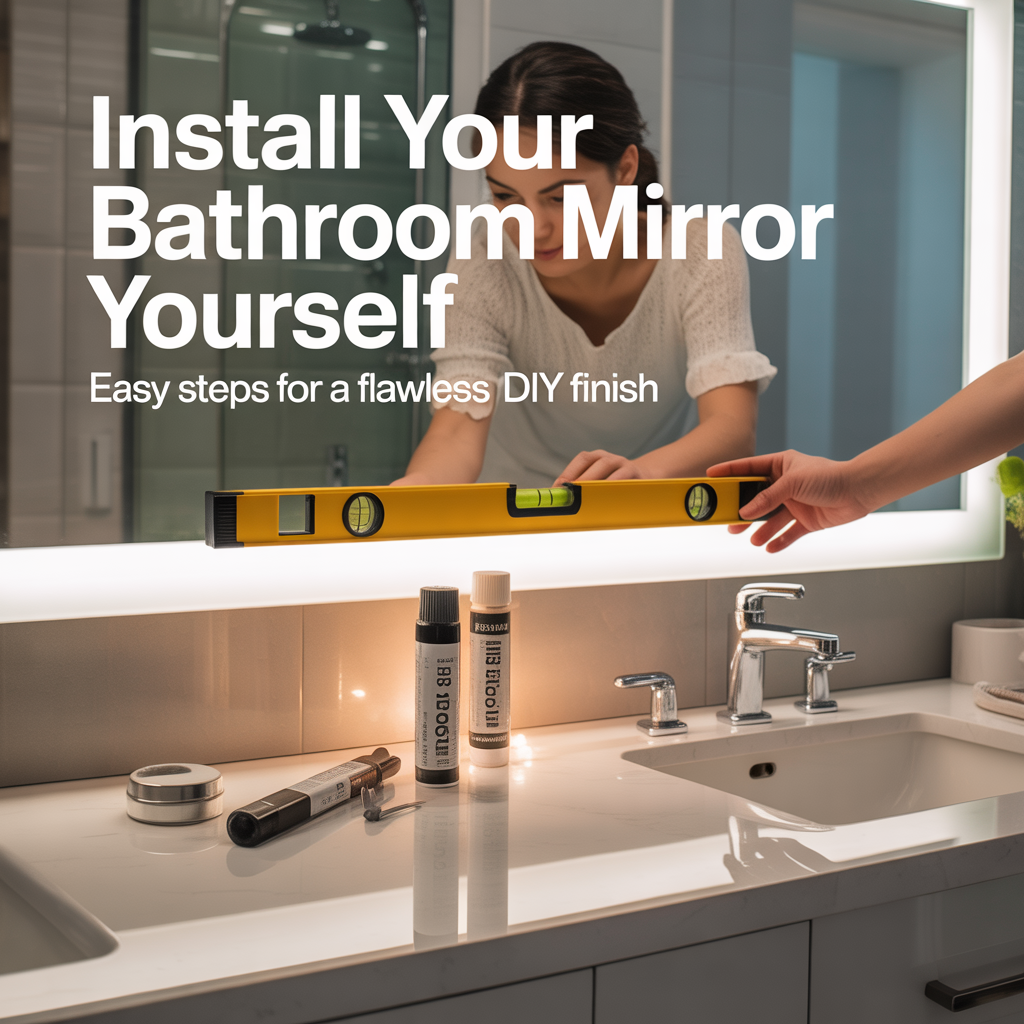
Once you’ve marked your screw positions on the wall, hold the level against those marks. Both points should be perfectly level with each other. If they’re off even slightly, the mirror will hang crooked and you’ll see it every single morning. Fix it now, before anything goes into the wall.
Step three: drill and anchor
With your marks confirmed and level, drill pilot holes at each marked point. For drywall, a small pilot hole — slightly narrower than your screw or anchor — is enough. For tile, use the tile bit, go slow, and keep the drill steady. A piece of masking tape over the tile surface before drilling can help prevent the bit from wandering when it first contacts the glazed surface.
If you’re using wall anchors, tap them into the pilot holes until they sit flush with the wall surface. Don’t hammer them in crooked. They need to go in straight to hold properly.
Drive your screws in until they’re snug — not all the way in yet. Leave them protruding about a quarter inch from the wall if your mirror hangs on a wire or hook. If you’re using clips or fixed brackets, follow the hardware instructions for how far to drive the screws before mounting.
Step four: hang the mirror
This is the satisfying part, and also the part where you most need a second set of hands if the mirror is large.
For wire-hung mirrors: hook the wire over both screws and let the mirror settle. Then check it with your level again. Most wire-hung mirrors can be adjusted slightly left or right, and the wire position on the back can be shifted to correct any tilt. Take the extra minute to get it right.
For clip-mounted mirrors: most clip systems use a bottom rail that the mirror rests on, and top clips that lock it in place. Set the bottom rail first, rest the mirror on it, then secure the top clips. These systems are very stable once installed and are common for larger, heavier mirrors.
For adhesive mounting: some lighter frameless mirrors are designed to be glued directly to the wall with mirror adhesive rather than screwed. This works well on flat, clean walls. The critical thing with adhesive mounting is surface prep — the wall needs to be completely clean and dry before the adhesive goes on, and you’ll need to hold or prop the mirror in place for several minutes until the adhesive grabs. Read the cure time on whatever adhesive you’re using before you walk away.
Step five: check everything before you call it done
Once the mirror is up, give it a gentle test — press lightly at the corners and edges to make sure nothing shifts or wobbles. If it moves, one of your anchors isn’t seated properly. Better to find that out now than three months later when it decides to come off the wall at 6 in the morning.
Check the level one more time with the mirror in place. Sometimes the act of hanging changes things slightly, especially with wire-hung mirrors. A small adjustment now takes thirty seconds. Living with a slightly crooked mirror takes a toll on your patience every single day.
Clean the mirror surface before you step back to admire it. Fingerprints from installation show up clearly in bathroom lighting, and the first impression matters.
The one thing worth spending money on
If you’re going to buy one tool for this job that you don’t already own, buy a decent stud finder. The cheap ones give false readings constantly and will drive you crazy. A mid-range electronic stud finder — nothing expensive, twenty or thirty dollars — is accurate, fast, and saves you from drilling test holes all over your wall trying to figure out where the studs are.
Everything else you probably already own or can borrow. This is genuinely a one-tool job if you have the basics covered.
When to actually call a professional
Most bathroom mirror installations don’t require one. But there are situations where it makes sense: if your mirror is very large and very heavy — over 50 or 60 pounds — professional installation with proper structural anchoring is worth it. If your walls are unusual — old plaster, concrete, or structural tile — and you’re not confident about drilling into them safely, get help. And if your mirror includes electrical components like a built-in LED system that needs to be wired, that part should be handled by an electrician.
For the vast majority of bathroom mirrors though? You can do this. My three months of delay was completely unnecessary. The job itself took less time than driving to a hardware store.