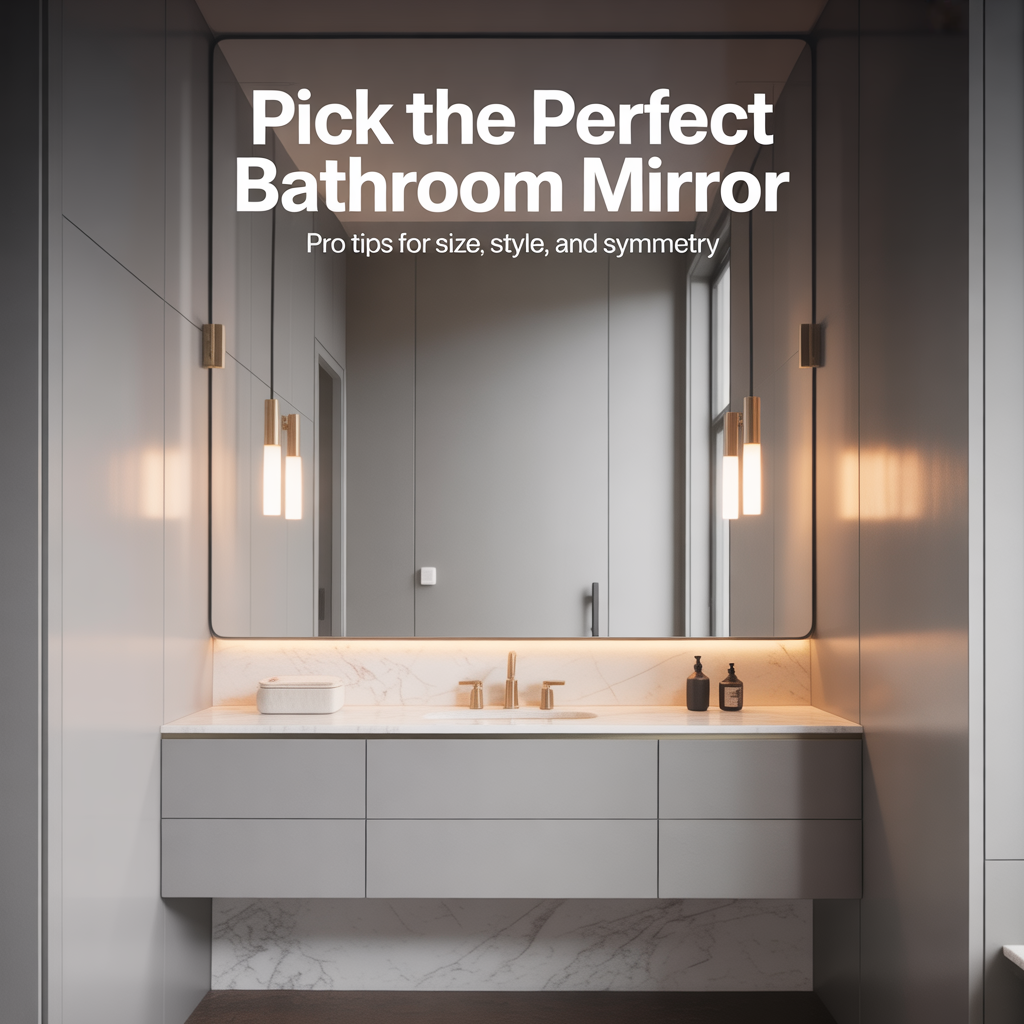
The first mirror I hung in my bathroom was too small. Not by a little — by a lot. It sat above my sink like a sticky note on a whiteboard. Every morning I’d lean in, tilt my head, and remind myself to fix it. I never did. Two years passed. Two years of a mirror that was clearly, obviously wrong.
So I get it. Mirror sizing feels like a minor decision. It’s not.
Get it right and nobody notices — which is exactly the point. Get it wrong and something feels off every single day, even if you can’t name why. Here’s everything I wish someone had told me before I started drilling holes.
Start with the vanity, not the wall
Most people measure the wall first. That’s backwards. The vanity is your anchor. Your mirror should be slightly narrower than the vanity — usually 2 to 4 inches narrower on each side. That little gap is what makes it look intentional instead of accidental.
If your vanity is 36 inches wide, you’re looking at a mirror between 28 and 32 inches. If it’s 60 inches, aim for 52 to 56. The mirror doesn’t have to match the exact width — it just can’t be wider. Once it is, the whole thing looks like it belongs in a different bathroom.
The height thing nobody talks about
Width gets all the attention. Height is what actually makes a mirror usable.
Here’s the honest test: stand in front of where the mirror will go. You should be able to see your full face plus a few inches above your head. If you’re stretching to see yourself, it’s too low or too short. If you’re seeing your chest more than your face, it’s too high.
For most adults, the center of the mirror should sit around 57 to 65 inches from the floor. If your household has people of very different heights — kids, teenagers, tall partners — lean toward the taller end, or go with a longer mirror that covers more range. A 42-inch tall mirror forgives a lot.
Leave space for the light fixture
This is the one I see people skip constantly. If you have a light fixture above where the mirror will go, you need at least 4 to 6 inches between the top of the mirror and the bottom of the fixture. Less than that and it looks crammed. More than that starts to look like they were installed on different days by different people who never spoke.
Measure that gap before you buy. It changes everything about what height mirror will actually work.
Small bathroom? Go bigger than you think
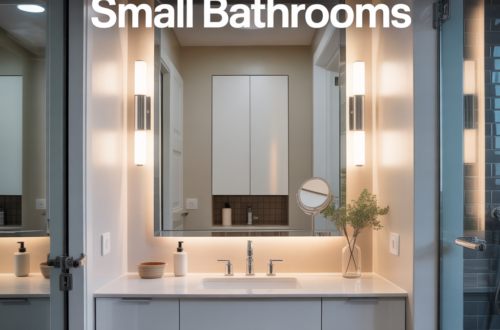
This is counterintuitive and it took me a while to believe it. In a small bathroom, a larger mirror almost always looks better than a smaller one. It reflects light, it creates the illusion of depth, and it stops the room from feeling like it’s closing in.
The instinct to “keep it proportional” in a tight space usually leads to mirrors that feel timid. A mirror that goes high — close to the ceiling — makes the whole room feel taller. A mirror that spans most of the vanity makes it feel wider. These are cheap tricks. They work.
Two sinks means two decisions
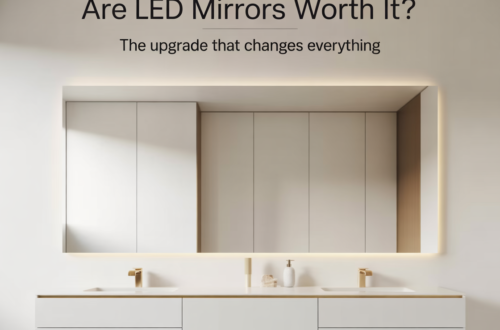
Double vanity setups come down to personal preference more than anything else. One large mirror across both sinks looks clean and modern — almost like a hotel. Two individual mirrors, one above each sink, feels more symmetrical and gives each person their own space.
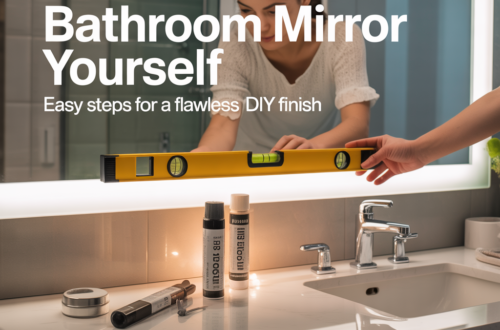
If you go with two mirrors, keep them the same size and line them up at exactly the same height. Even a centimeter off will bother you. Measure twice, hang once.
The mistakes worth avoiding
Hanging the mirror too high is probably the most common one. It usually happens when people try to center it on the wall instead of centering it relative to the vanity and their own eye level. The wall doesn’t matter. You matter. Your face is what needs to be reflected.
Going too small is the second. It’s usually a budget decision — smaller mirror, lower price. But it ends up costing you more in visual awkwardness than you saved in dollars.
And if you have a medicine cabinet mirror, check how far it sticks out from the wall. Shallow walls with a deep cabinet can create an awkward bump that makes the whole thing look like an afterthought.
A quick reference before you buy
Mirror width
Vanity width minus 4–8 inches total
Mirror center height
57–65 inches from floor
Gap to light fixture
At least 4–6 inches above mirror
Mirror height
30–48 inches depending on household
The actual answer
There’s no single perfect mirror size. There’s only the right size for your vanity, your wall, your light fixture, and the people who use that bathroom every day. The numbers above give you a solid range — but the real test is standing in the space with a tape measure and asking whether the mirror you’re considering will actually work for the life being lived there.
That tiny mirror I had? I finally replaced it. Went bigger than felt comfortable. Looks completely right now. Should have done it on day one.