The apartment I lived in after college had one bedroom. It was small — maybe ten by eleven feet, with one window that faced a brick wall and let in about forty minutes of direct light on a good day. I wanted blue walls. Everyone told me it would feel like sleeping in a shoebox at the bottom of the ocean.
I did it anyway. With the right shade and a few deliberate choices, the room felt calm and genuinely comfortable. Not spacious — it was still ten by eleven feet, and no paint color changes physics — but not dark either. Not cramped. Just a small room that felt like it had been thought about.
The people warning me weren’t wrong about the risk. They were wrong about it being inevitable.
The real problem with blue in small rooms
Dark rooms feel dark for two reasons: they don’t have enough light, and they have surfaces that absorb what light they do have. Blue is a color that can do either — absorb light and feel heavy, or reflect it and feel airy — depending entirely on which blue you choose and what you put around it.
The mistake most people make is treating all blue as equivalent. Navy in a small room with one window will feel oppressive. That’s real. But dusty blue or soft slate blue in the same room with the right lighting setup will feel completely different — cool, calm, and no darker than the white room it replaced.
The shade is the most important decision. Everything else is in service of getting that decision right.
Choose a blue with gray or green in it
Pure blue — saturated, no undertone — is the version most likely to make a small room feel dark. What you want is a blue that has been softened by something else. Gray gives blue a quieter quality, something that sits on the wall without demanding attention. Green pulls blue toward something more natural, more alive, less like a color decision and more like a material property.
Dusty blue, muted teal-blue, soft denim blue, grayish slate — these are all versions of blue that have been desaturated enough to breathe in a small space. They still read unmistakably as blue. They just don’t press against the room the way a fully saturated shade would.
Avoid anything that looks bright or jewel-toned on the chip. If it looks vibrant in the store, it will feel intense on four walls. What looks slightly dull on a small chip often becomes exactly right when it’s surrounding you.
Don’t paint all four walls — at first
If you’re genuinely uncertain about how blue will work in your small room, start with one wall. The wall behind the bed is the natural choice — it frames the room’s focal point, creates a sense of depth by pushing that wall back visually, and lets you live with the color before committing to the full room.
An accent wall in a muted blue against three white or warm white walls is a genuinely effective middle ground. The blue is present, the room has color and personality, and the lighter walls keep the space feeling open. Many people who start this way end up happy with it and never paint the other three walls. Some do eventually go full blue and find that the room handles it better than they expected. Either outcome is fine.
What the accent wall approach gives you is information. You see how your specific blue behaves in your specific room with your specific light before you’re committed to four walls of it.
Lighting is doing half the work
A small blue bedroom with poor lighting will feel like a cave. The same room with layered, warm lighting will feel like a sanctuary. This is not an exaggeration — lighting changes the color of blue walls more dramatically than it changes almost any other color, because blue is particularly sensitive to the temperature of light sources.
Warm bulbs — 2700K is the target — turn blue walls golden and soft in the evening. Cool bulbs turn them stark and institutional. If you are using cool-toned bulbs anywhere in a blue room, change them. This alone can transform how the room feels after dark.
Layer the sources. A ceiling fixture provides overall light, but it’s the worst kind for making a small room feel warm and dimensional. Add bedside lamps at a lower height — the light source being closer to eye level creates intimacy rather than the flat overhead wash that makes small rooms feel smaller. If there’s space for a floor lamp in the corner, that creates depth by lighting a part of the room that ceiling fixtures leave in shadow.
More light sources at lower wattages, spread around the room, will always make a small blue bedroom feel larger and warmer than a single bright fixture trying to do everything from the ceiling.
Keep the floor and ceiling light
In a small room with blue walls, the floor and ceiling are doing critical work to prevent the space from feeling enclosed. A dark floor with blue walls creates a room where everything is absorbing light — there’s nowhere for the eye to rest on something bright, and the room reads as dim even when it isn’t.
Light-colored flooring — pale wood, light tile, a large cream or ivory rug over darker floors — reflects light back up into the room and creates a visual sense of space that compensates for the blue walls. The ceiling should almost always stay white or very close to it in a small blue bedroom. A white ceiling reflects light downward and creates a feeling of height. Paint it blue and the room wraps around you in a way that feels lovely in large rooms and suffocating in small ones.
The principle is simple: blue takes up the walls, which are the middle layer of the room. Let the top and bottom stay light. That contrast — light above, light below, blue in between — creates a room that feels bounded but not trapped.
Furniture: smaller, lighter, fewer
A small blue bedroom does not have room for furniture that competes with the walls. Heavy, dark, large pieces make the room feel like a storage unit. The furniture should feel lightweight — visually if not literally — and there should be less of it than your instinct suggests.
Beds with legs rather than solid bases let light pass under them, which makes the floor feel larger. Nightstands that are open — shelves rather than enclosed cabinets — do the same. A mirror, positioned to reflect the window or the lightest part of the room, effectively adds a light source and creates the impression of a wall opening onto more space.
Natural wood in a light to medium tone is the most reliable furniture choice. It warms the blue without adding visual weight. Avoid dark espresso or black furniture unless the room has excellent natural light and you are confident in the overall palette — in a small, limited-light room, dark furniture against blue walls removes all the breathing room.
Bedding and textiles: warm and light
In a small blue bedroom, the bed takes up a significant portion of the floor space — which means the bedding color has an outsized effect on how the room feels overall. Dark or heavily patterned bedding in a small blue room makes everything feel busy and compressed. Light bedding opens the room up.
Cream, warm white, soft oatmeal — any of these as the primary bedding color creates a bright center in the room that the eye naturally rests on. It also completes the top-light, bottom-light, blue-in-the-middle structure that makes small blue rooms work. The bed becomes the warmest, lightest thing in the room, and everything else is organized around that.
Texture adds richness without adding color weight. A linen duvet, a waffle-weave throw, a slightly different weave in the pillow cases — these layers make the bedding feel considered and luxurious without introducing patterns or colors that would make the room feel smaller.
What I learned from the brick-wall bedroom
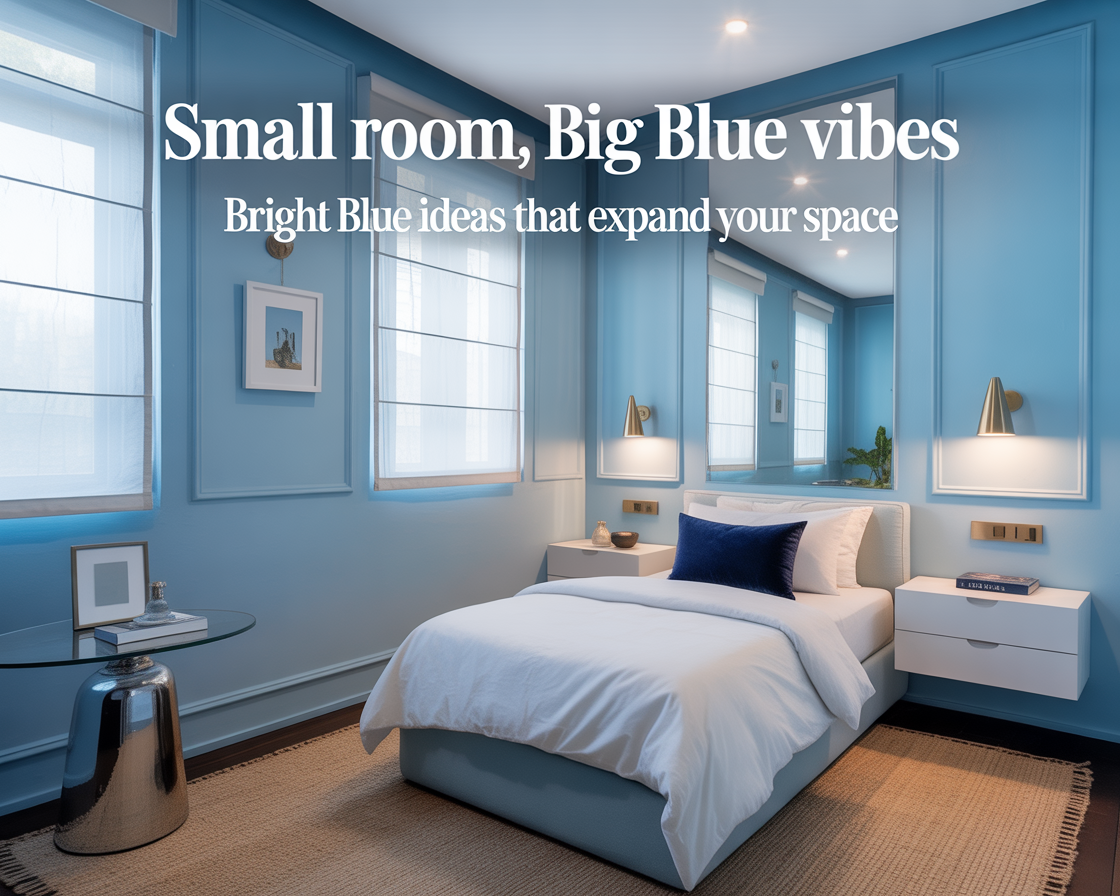
The small apartment bedroom worked not because I ignored the constraints, but because I worked with them deliberately. Muted dusty blue on all four walls. White ceiling. Pale wood floor with a cream rug. Two bedside lamps with warm bulbs, no overhead light used in the evenings. Light linen bedding. One small mirror positioned to catch the window light and throw it across the room.
None of those decisions were expensive. Most of them were just careful. The room was still ten by eleven feet. It still had forty minutes of direct light on a good day. But it felt like a room someone had chosen to make, not a room someone had been assigned.
That’s what small blue bedrooms can be. Not a compromise. A considered choice that happens to require more thought than a larger room would. The thought is worth it.