Introduction
Transforming your kitchen with two-toned kitchen cabinet color combinations creates visual interest and depth that single-color schemes simply cannot match. This design approach allows you to balance light and dark elements while expressing your personal style through strategic color placement. Whether you’re renovating an outdated space or building from scratch, two tone kitchen cabinets offer endless possibilities for creating a cohesive, sophisticated look. Let’s explore fifteen stunning color palettes that will elevate your kitchen design.
Contemporary Two-Toned Color Schemes
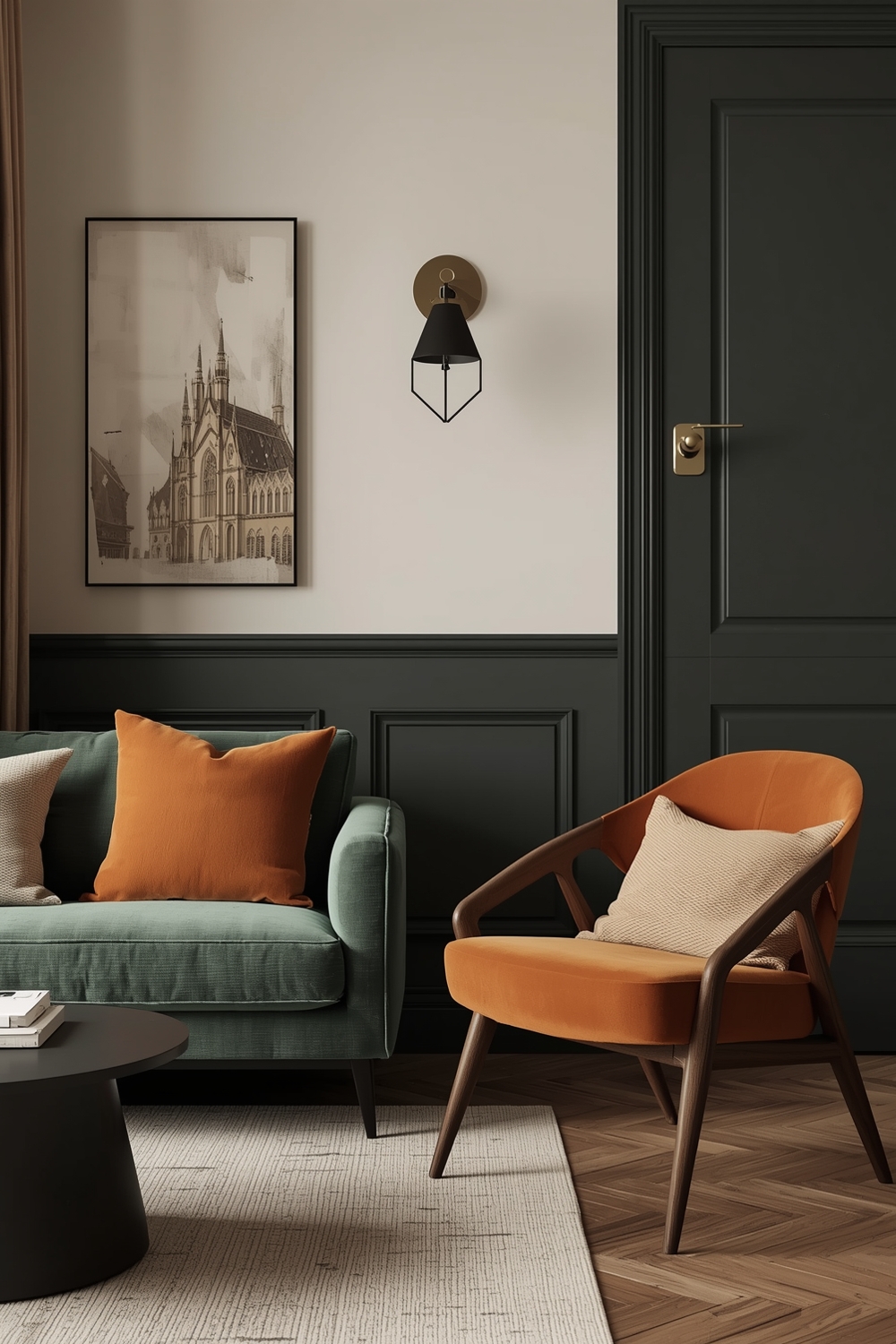
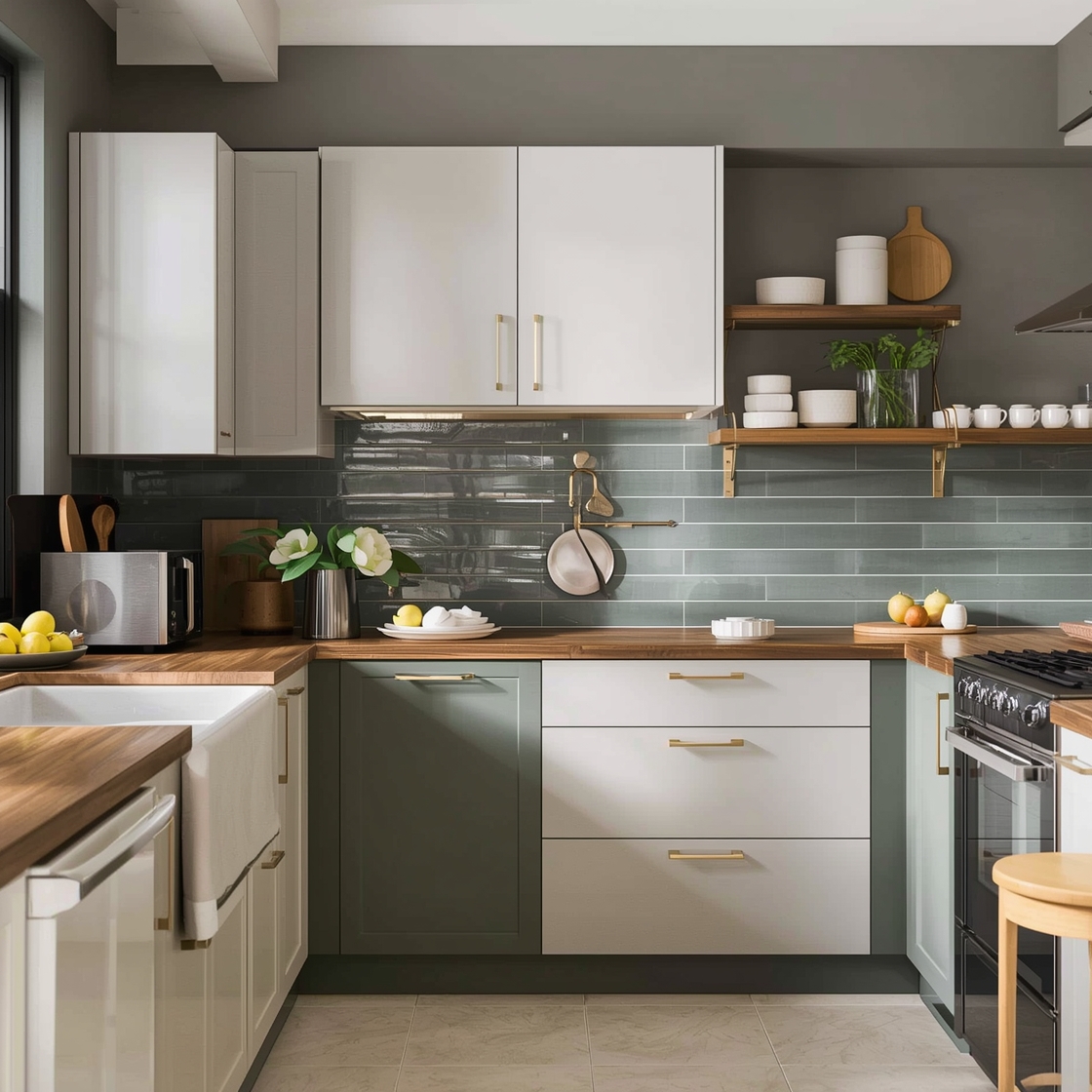
Contemporary kitchens thrive on clean lines and bold contrasts that make a statement. The classic combination of crisp white upper cabinets paired with charcoal gray lowers creates a timeless foundation that works with virtually any décor style. For those seeking warmer tones, navy blue base cabinets complemented by soft cream uppers deliver sophistication without feeling cold. The two-toned kitchen cabinet color approach in contemporary designs often emphasizes horizontal division, creating the illusion of expanded space while maintaining visual balance. Another popular contemporary palette combines sage green lowers with white oak uppers, bringing natural elements into modern spaces. This combination feels fresh yet grounded, perfect for homeowners who want to soften industrial features.
Two-Toned Cabinets with Dark Bases and Light Uppers
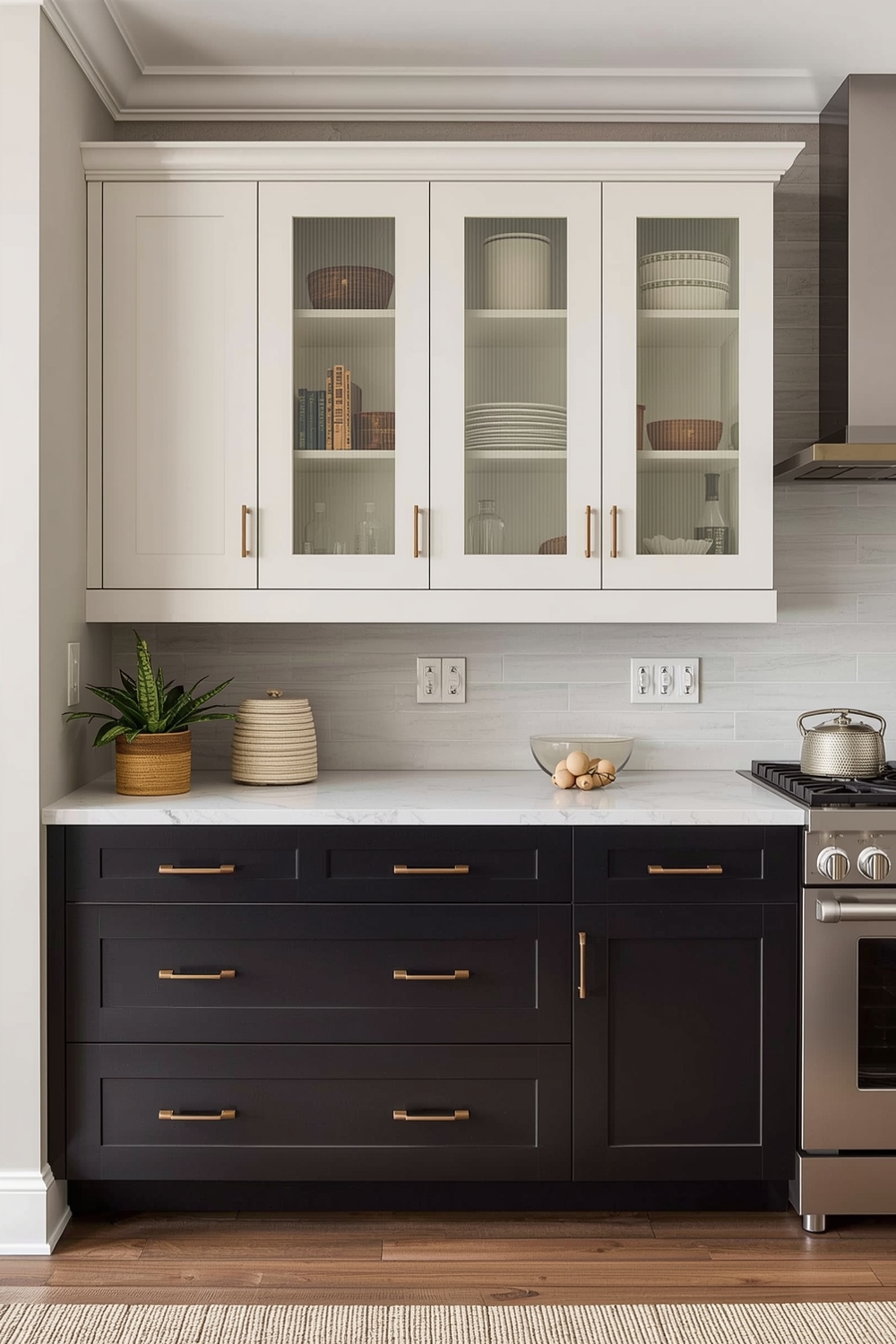
The dark-base, light-upper configuration remains one of the most practical and visually appealing applications of two-tone kitchen cabinets. This arrangement naturally anchors the space while keeping the upper areas bright and open. Deep espresso or black lower cabinets paired with bright white uppers create dramatic contrast that draws the eye upward, making ceilings appear taller. The darker base cabinets cleverly conceal wear and tear in high-traffic areas while the lighter uppers reflect natural light throughout the room. For a softer interpretation, consider chocolate brown bases with light gray uppers, which provides depth without the starkness of black and white. This two-toned kitchen cabinet color strategy works exceptionally well in kitchens with limited natural light, as it prevents the space from feeling cave-like while still offering rich tonal variation.
Two-Toned Cabinets with Mixed Metal Hardware
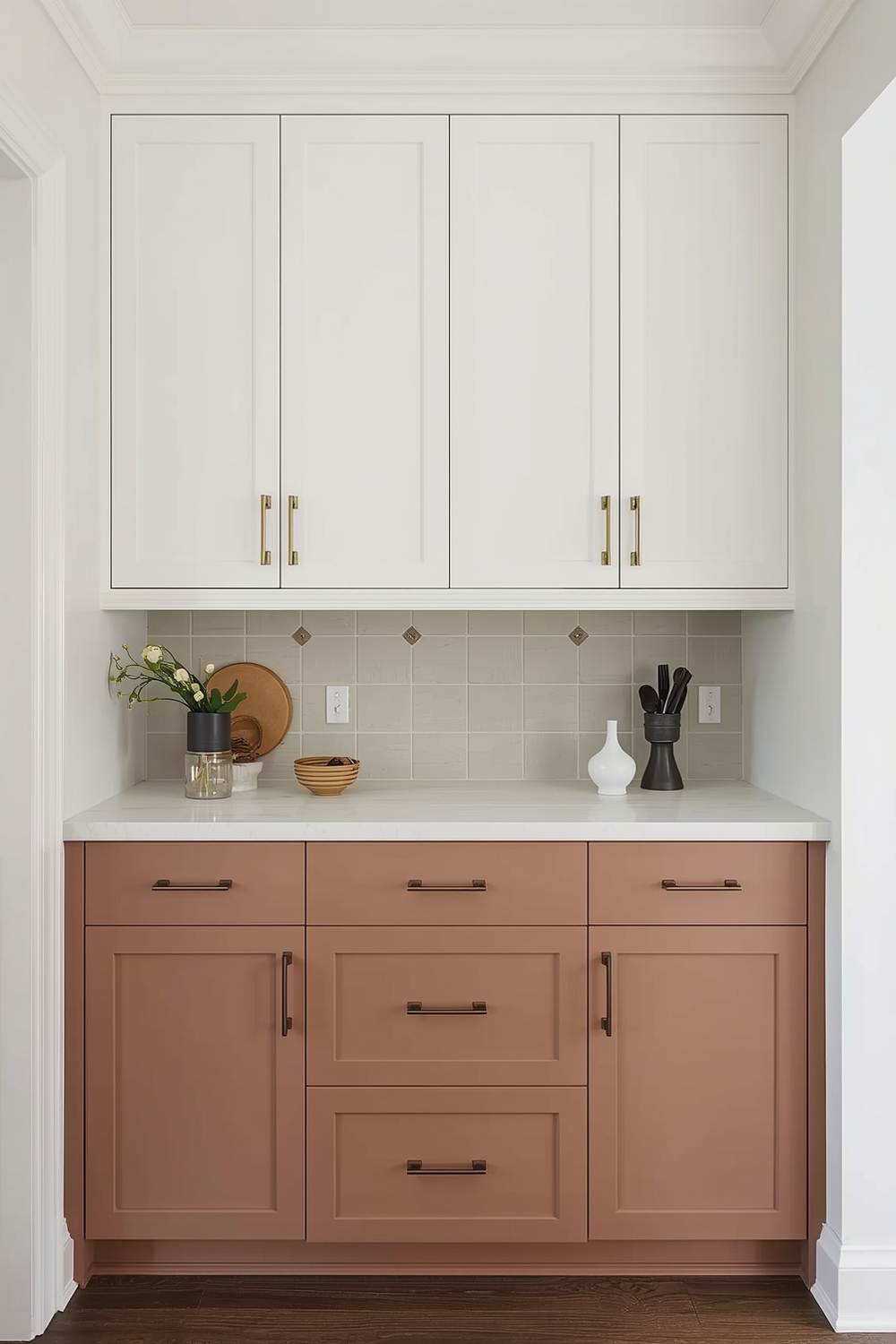
Hardware selection amplifies the impact of your two-toned cabinetry by adding another layer of visual interest. Pairing brushed brass handles on navy lower cabinets with polished chrome on white uppers creates an intentional, curated aesthetic that feels both luxurious and personalized. The mixed metal approach works particularly well when your two tone kitchen cabinets feature contrasting cool and warm tones. Copper hardware on forest green lowers complements nickel fixtures on cream uppers, bridging the color gap while adding metallic shimmer. This design technique allows you to incorporate trending finishes without committing to a single metal throughout the entire kitchen, offering flexibility as styles evolve.
Two-Toned Kitchen with an Eat-In Island
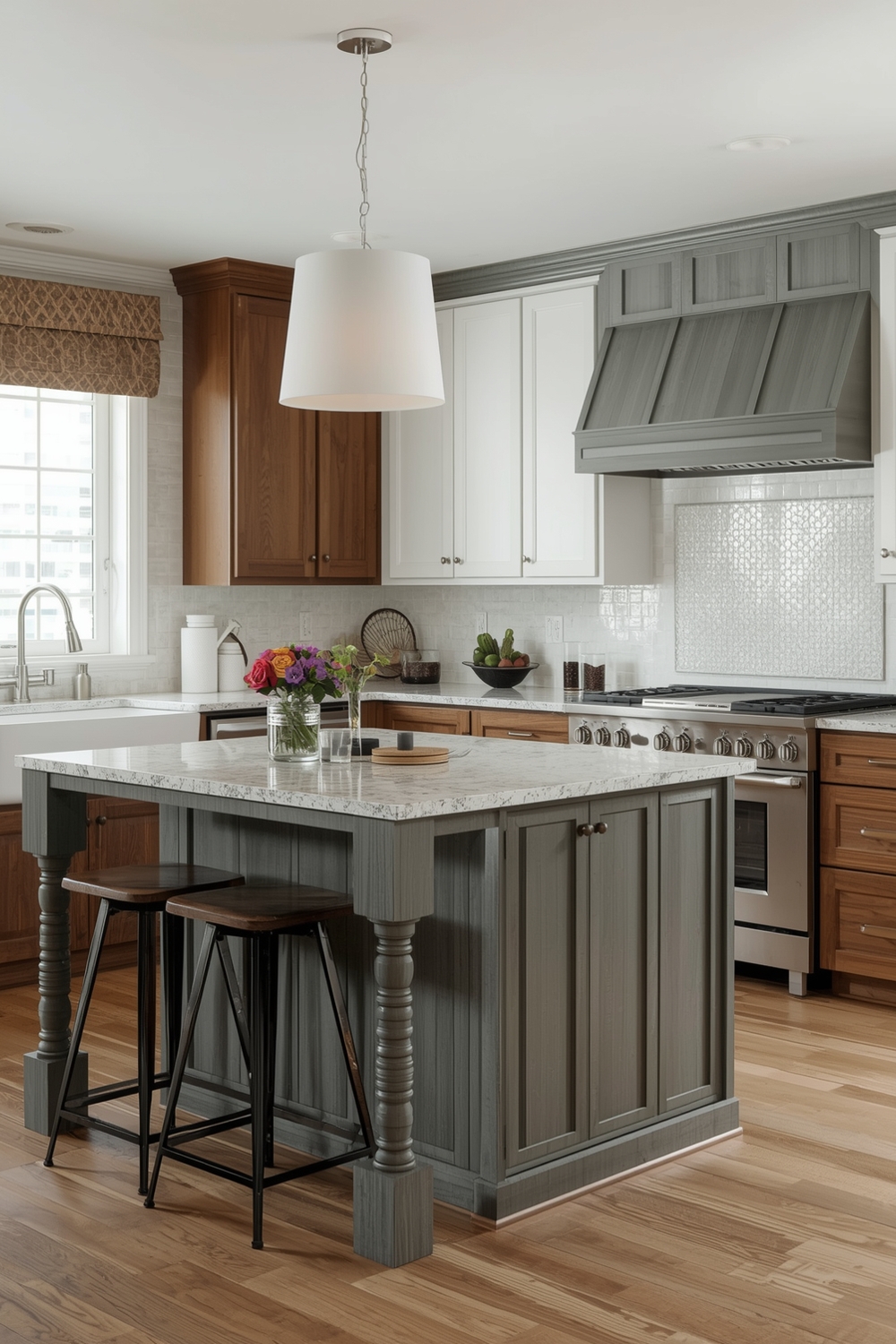
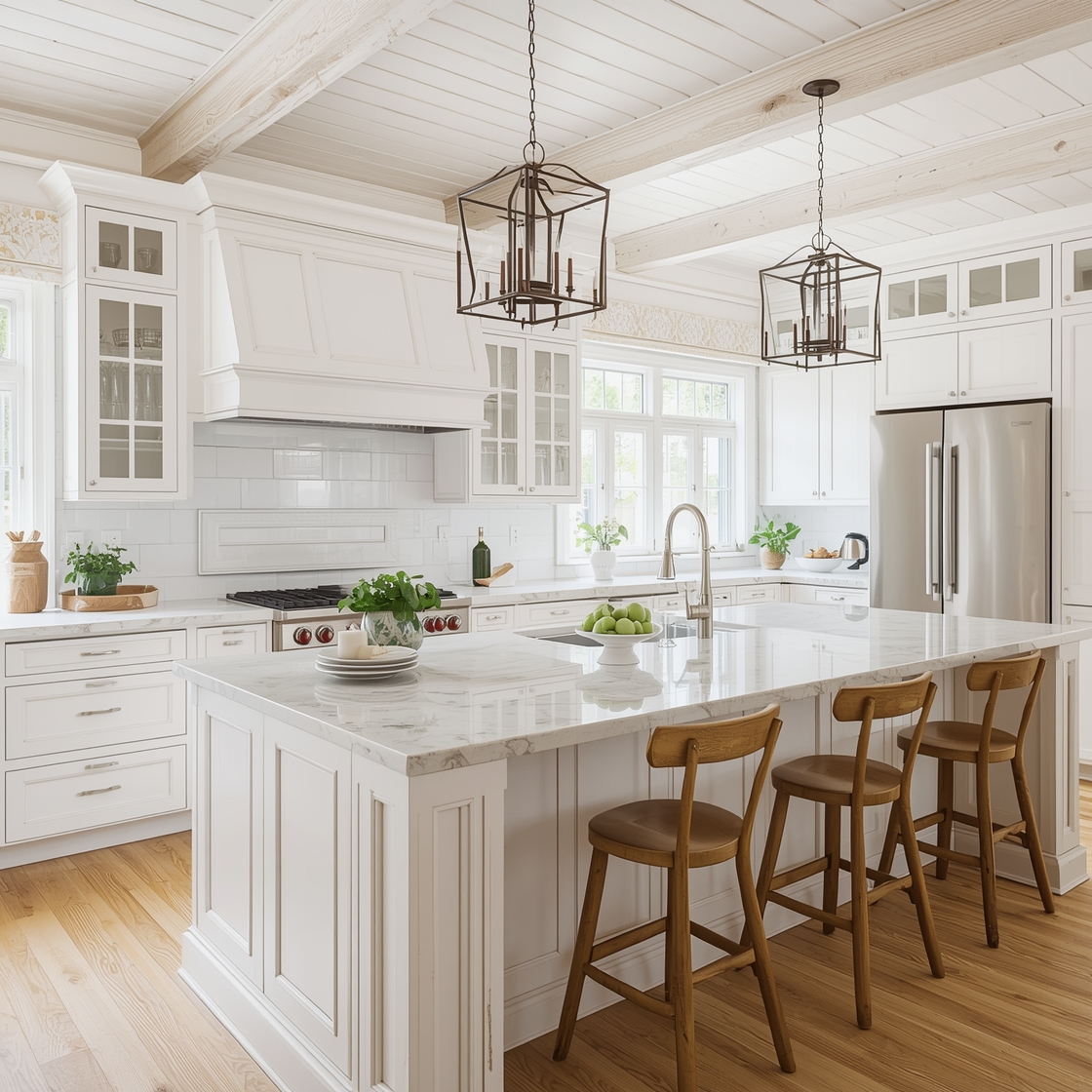
Kitchen islands provide the perfect opportunity to introduce a third accent color that ties your two-toned cabinet scheme together. A butcher block island surrounded by white perimeter uppers and slate blue lowers creates a welcoming focal point that invites family gathering. Alternatively, painting your island in a bold jewel tone like emerald green while keeping perimeter cabinets in neutral two-toned combinations adds unexpected personality. This approach transforms your island into a furniture piece rather than just additional storage. The two-toned kitchen cabinet color palette extends beautifully when the island serves as either a complementary third shade or a bridge between your primary two colors.
Two-Toned Cabinets with Concrete Finish Counters
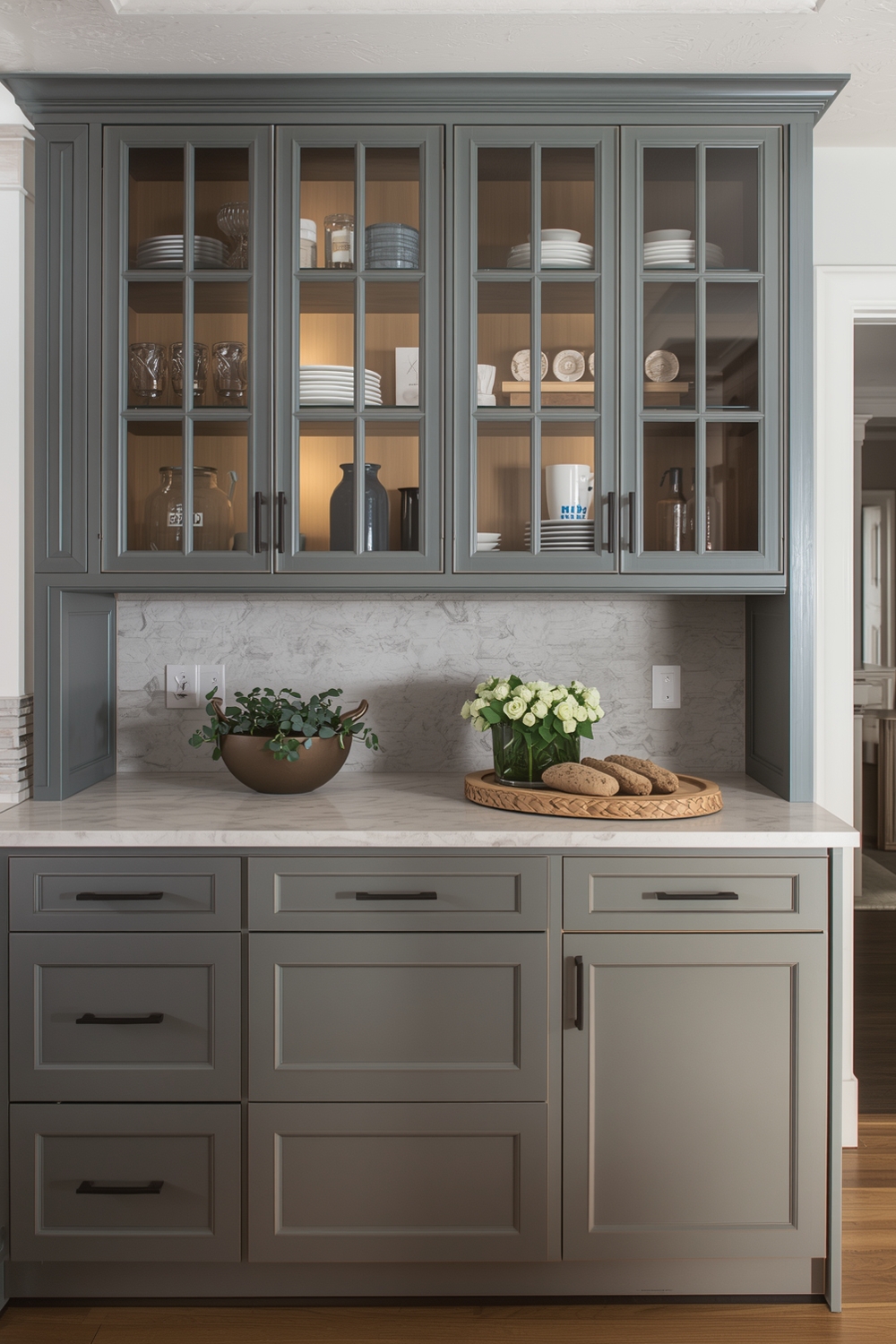
Industrial-inspired concrete countertops provide the perfect neutral canvas for bold two-toned cabinetry. The raw texture of concrete counters balances the refinement of painted cabinets, creating an intriguing juxtaposition of materials. Light concrete paired with black lower cabinets and natural wood uppers delivers an urban loft aesthetic that feels both edgy and inviting. The monochromatic concrete doesn’t compete with your cabinet colors, allowing the two-tone design to remain the star. For warmer spaces, darker concrete with honey-toned stain on base cabinets and white uppers softens the industrial edge while maintaining contemporary appeal. This combination works especially well in open-concept homes where the kitchen flows into living areas, as it provides visual interest without overwhelming adjacent spaces.
Two-Toned Kitchen Spatial Strategies
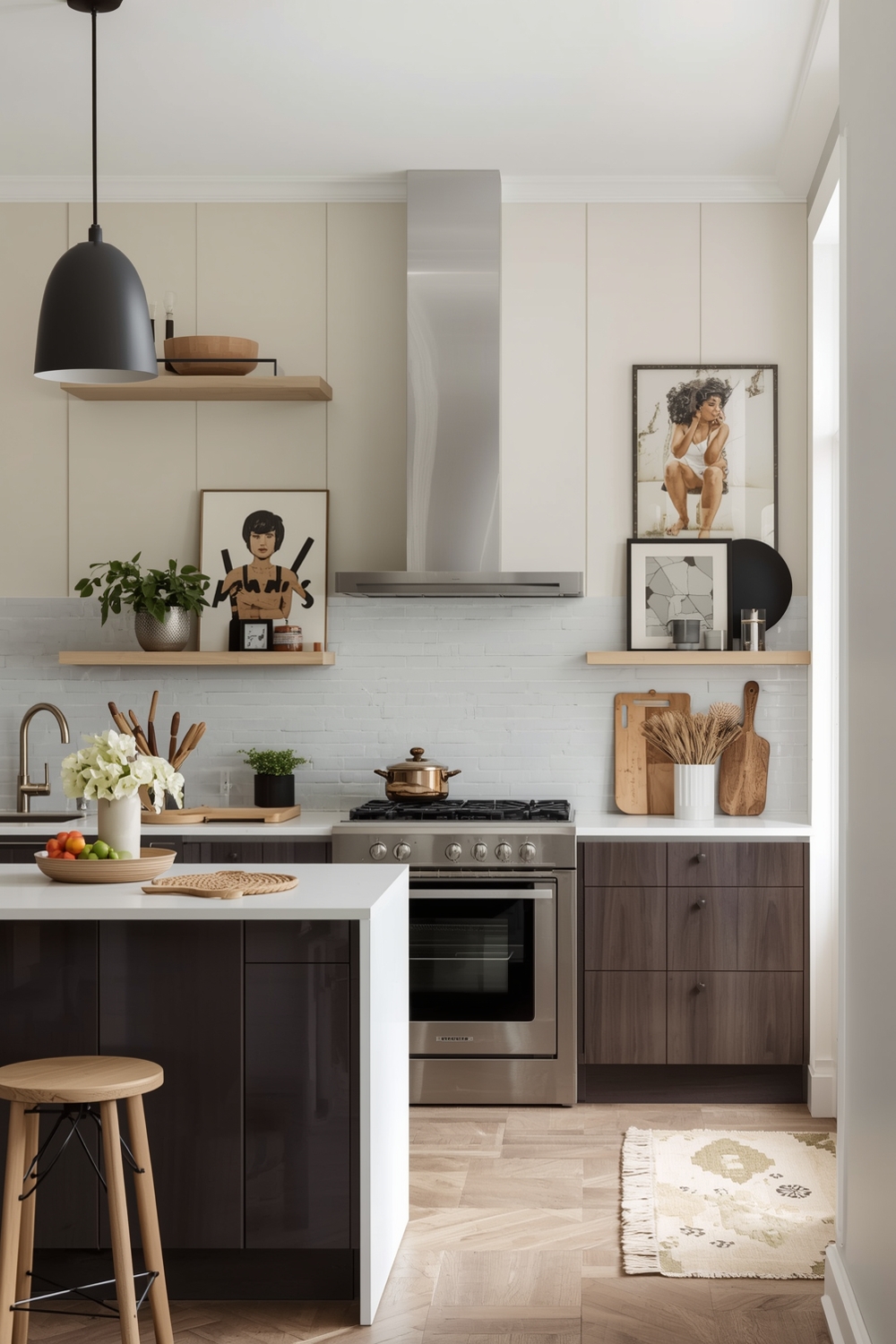
Strategic color placement using two-toned cabinets can completely reshape how a kitchen feels spatially. Placing lighter colors on window walls and darker tones opposite creates perceived depth and dimension. In galley kitchens, running one color down each wall prevents the narrow space from feeling monotonous. The two-toned kitchen cabinet color variation provides visual breaks that make the space feel wider. For L-shaped kitchens, transitioning colors at the corner creates natural zones for cooking and prep work. This subtle division organizes the space functionally while adding aesthetic appeal.
Two-Toned Solutions for Apartments
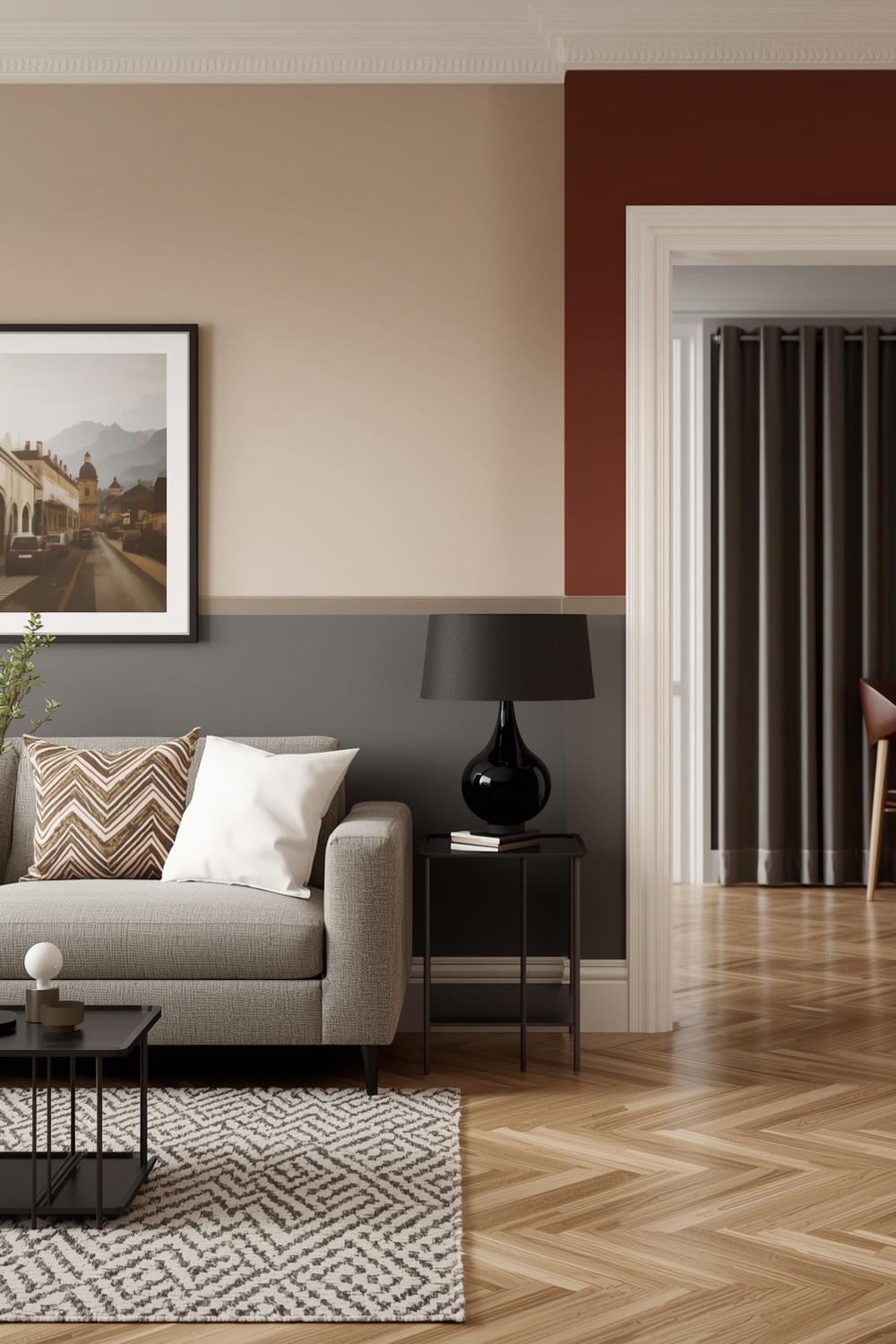
Apartment kitchens often lack square footage but can still embrace two-tone kitchen cabinets effectively. In compact spaces, keeping upper cabinets in light reflective colors like white or pale gray while adding personality through colored lower cabinets maximizes both style and function. Since apartments typically have limited natural light, this vertical color division brightens the space while allowing personal expression. A cheerful yellow or soft blue on base cabinets energizes without overwhelming. Consider removable cabinet film or peel-and-stick solutions for renters who want the two-toned look without permanent changes, offering design flexibility within lease restrictions.
Two-Toned Designs for Country Homes
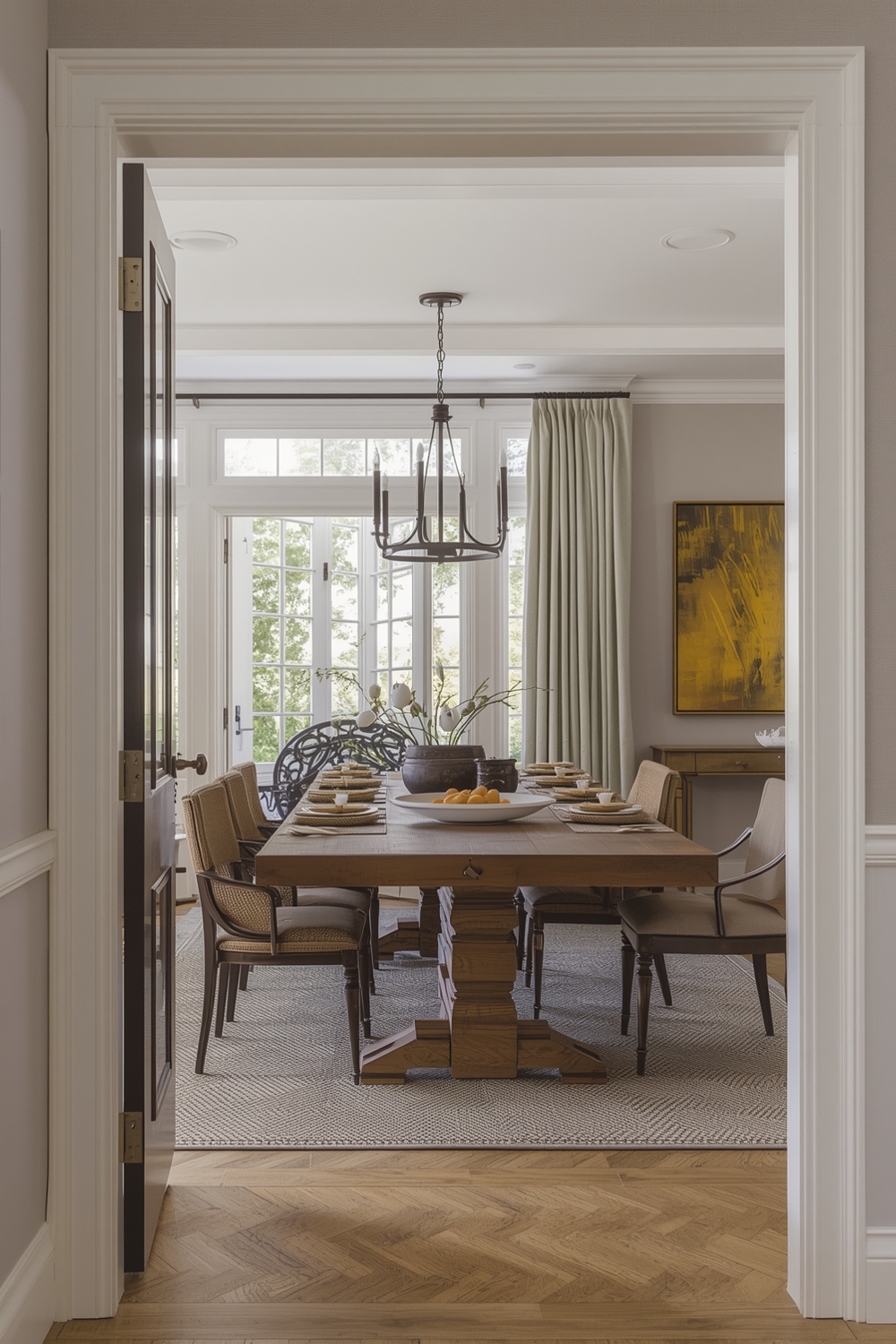
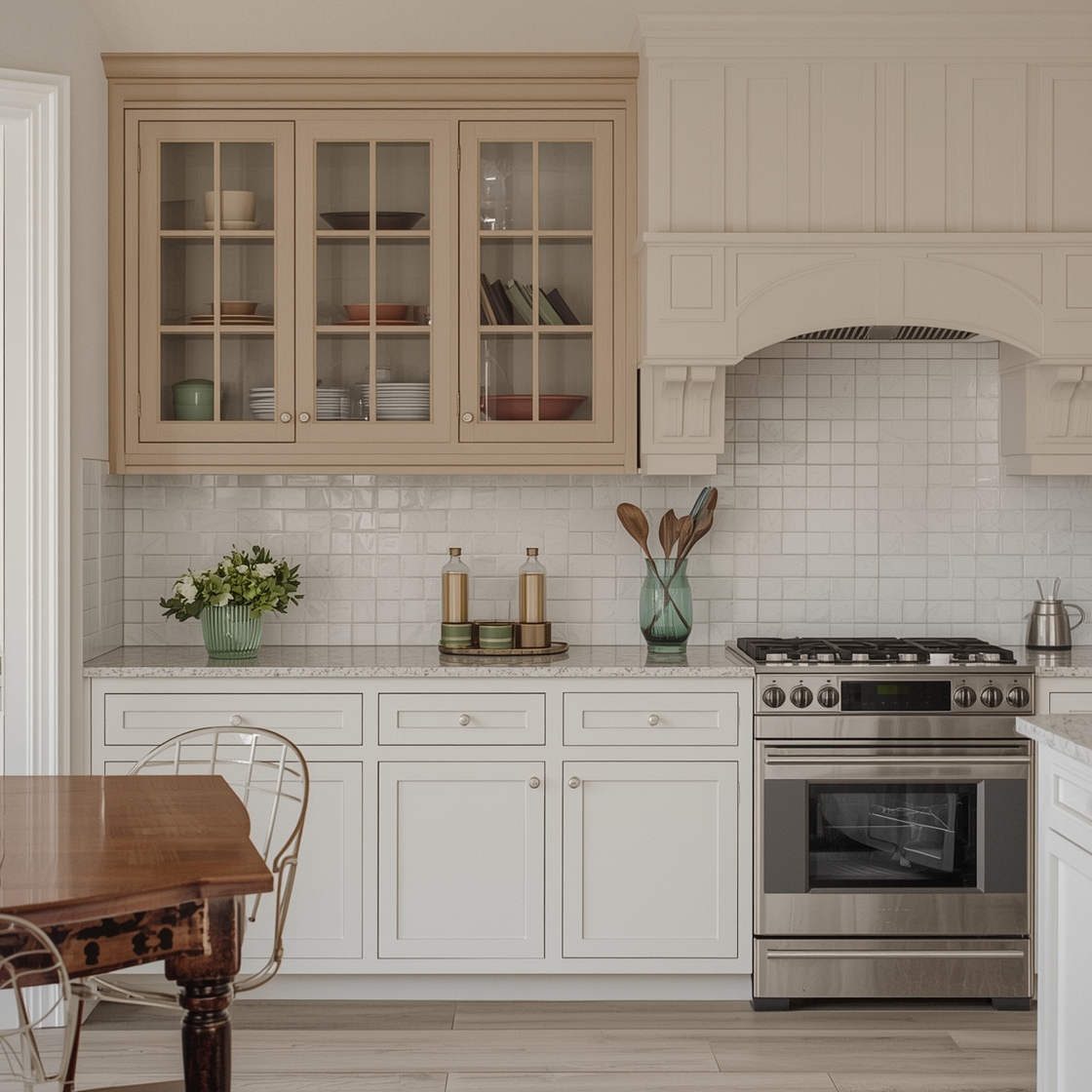
Country kitchens gain modern relevance through thoughtful two-toned color applications that honor traditional charm while feeling fresh. Cream lower cabinets paired with soft robin’s egg blue uppers evoke farmhouse nostalgia with updated sensibility. The two tone kitchen cabinets in country settings often incorporate distressed finishes or beadboard details that enhance the rustic character. Sage green paired with buttery yellow creates a garden-inspired palette perfect for homes surrounded by nature. Natural wood tones combined with painted whites or creams bridge old and new, allowing antique accessories and modern appliances to coexist harmoniously within the same space.
Two-Toned Cabinets with Industrial Pipe Shelving
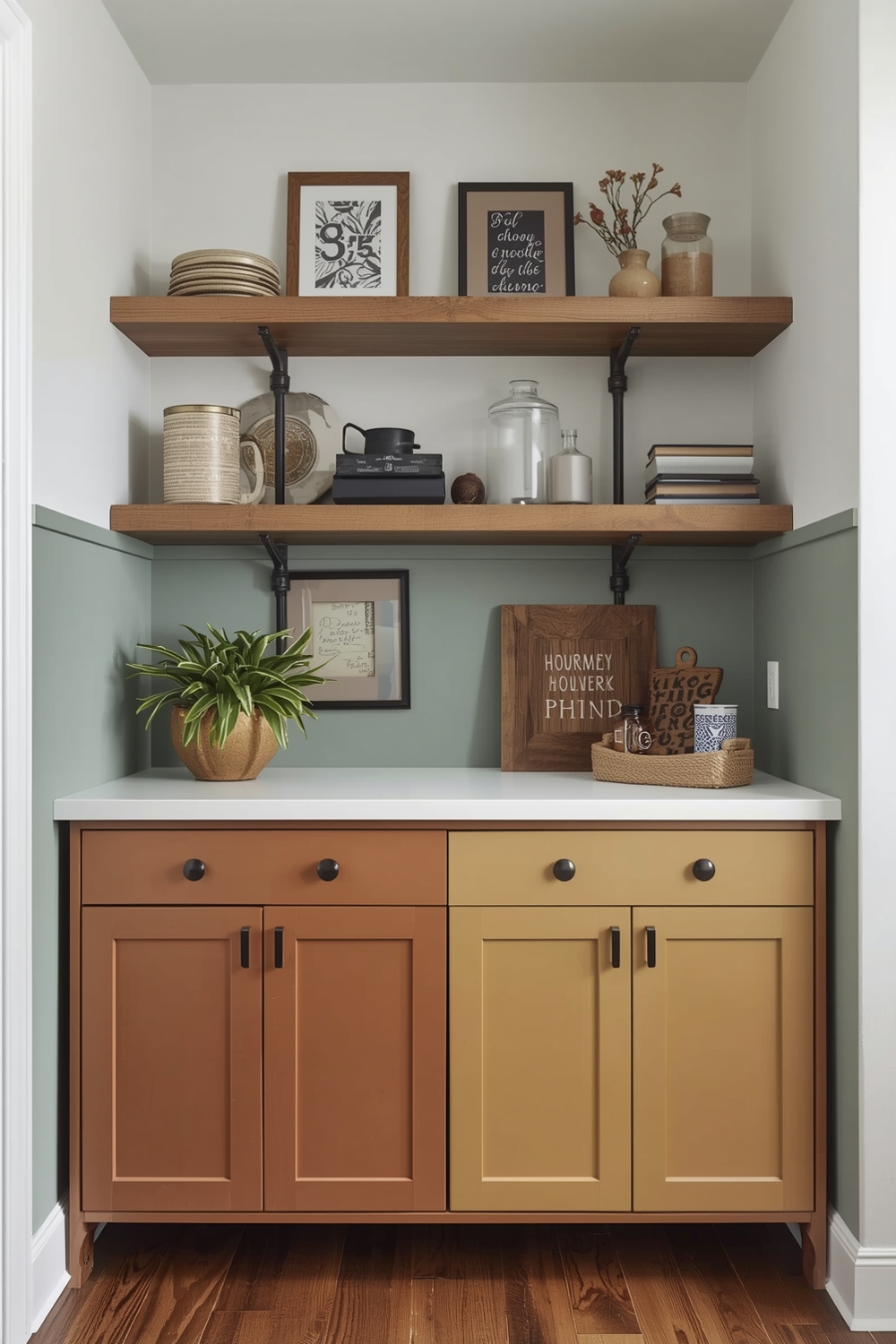
Replacing some upper cabinets with industrial pipe shelving creates open storage while emphasizing your two-toned base cabinet selection. Black pipe shelves above dark lower cabinets maintain cohesion while adding architectural interest. This approach works beautifully when your lower cabinets feature bold colors like deep teal or burgundy, as the open shelving prevents color saturation. The two-toned kitchen cabinet color impact remains strong while the industrial elements add texture and functionality. Displaying dishes, plants, or cookbooks on pipe shelves personalizes the space and breaks up solid cabinet runs, making kitchens feel less boxy and more custom-designed.
Highly Adaptable Two-Toned Kitchen Cabinets
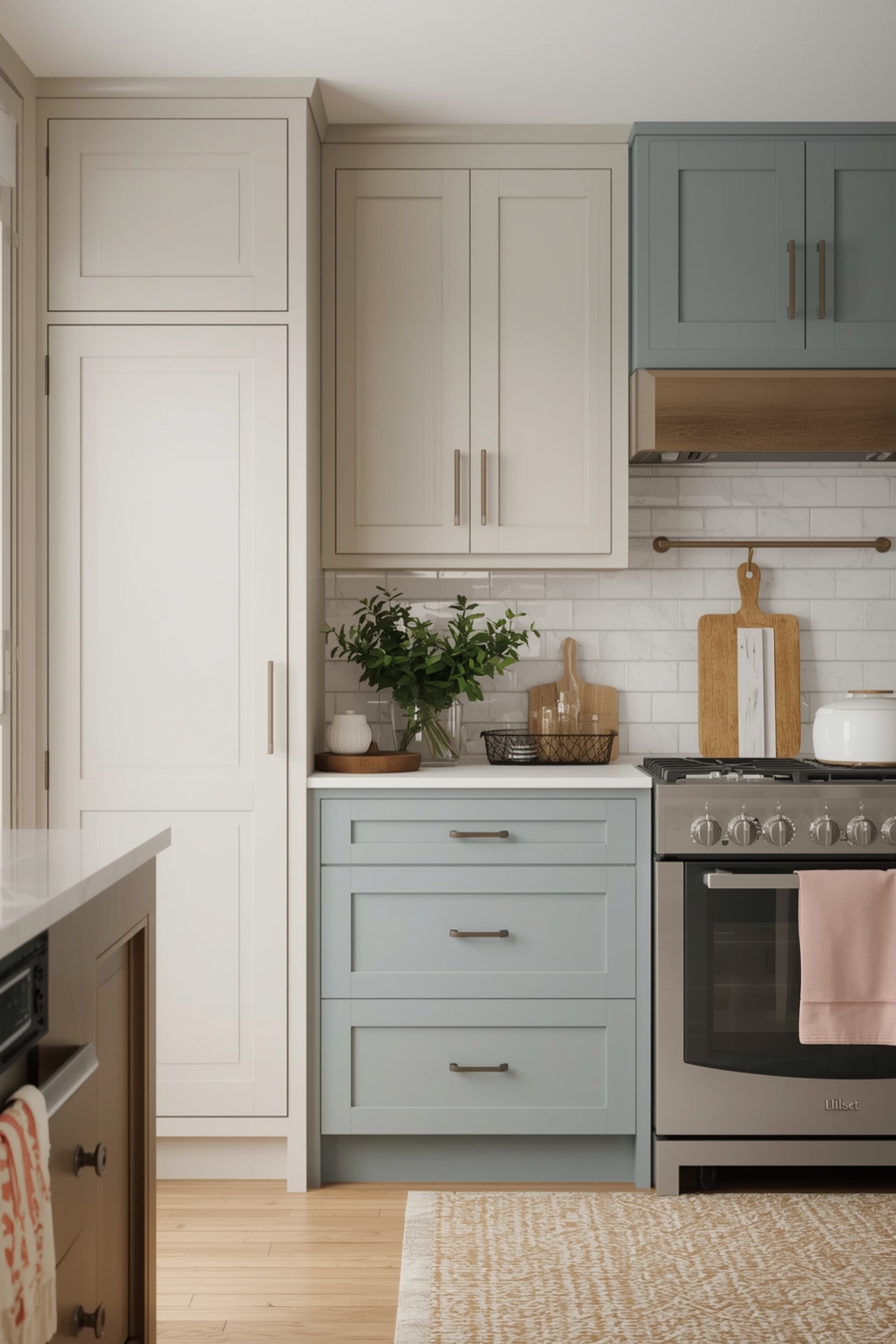
The beauty of two-toned cabinetry lies in its adaptability across changing trends and personal preferences. Neutral two-tone combinations like gray and white serve as a foundation that accepts new accent colors through accessories and décor updates. This flexibility means your kitchen won’t feel dated as design trends shift. You can easily refresh the space by changing hardware, lighting fixtures, or wall colors without replacing cabinets. The two tone kitchen cabinets approach essentially future-proofs your kitchen investment, providing longevity that monochromatic schemes sometimes lack.
Two-Toned Cabinets with Recessed Ceiling Lights
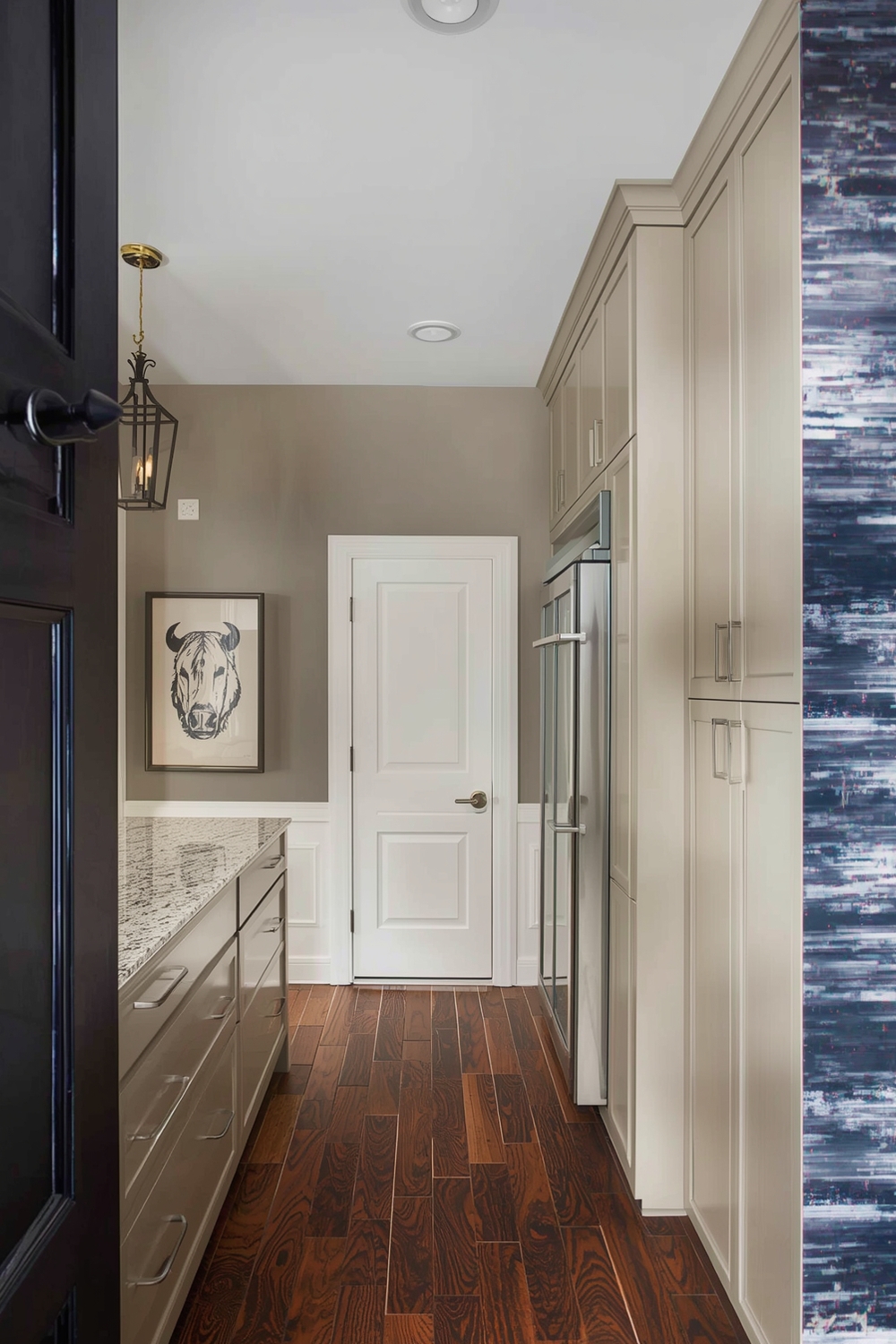
Proper lighting elevates any two-toned kitchen design by highlighting the color transitions and creating ambiance. Recessed ceiling lights positioned to illuminate both upper and lower cabinets ensure each color receives proper attention without creating harsh shadows. Under-cabinet lighting adds another dimension, creating a glow between your two cabinet colors that emphasizes the horizontal break. This layered lighting approach makes the two-toned kitchen cabinet color scheme more dramatic after dark. Consider adjustable LED strips that allow you to change color temperature based on time of day or activity, giving you ultimate control over how your two-toned cabinets appear throughout different usage scenarios.
Crisp Two-Toned Kitchen Cabinet Designs
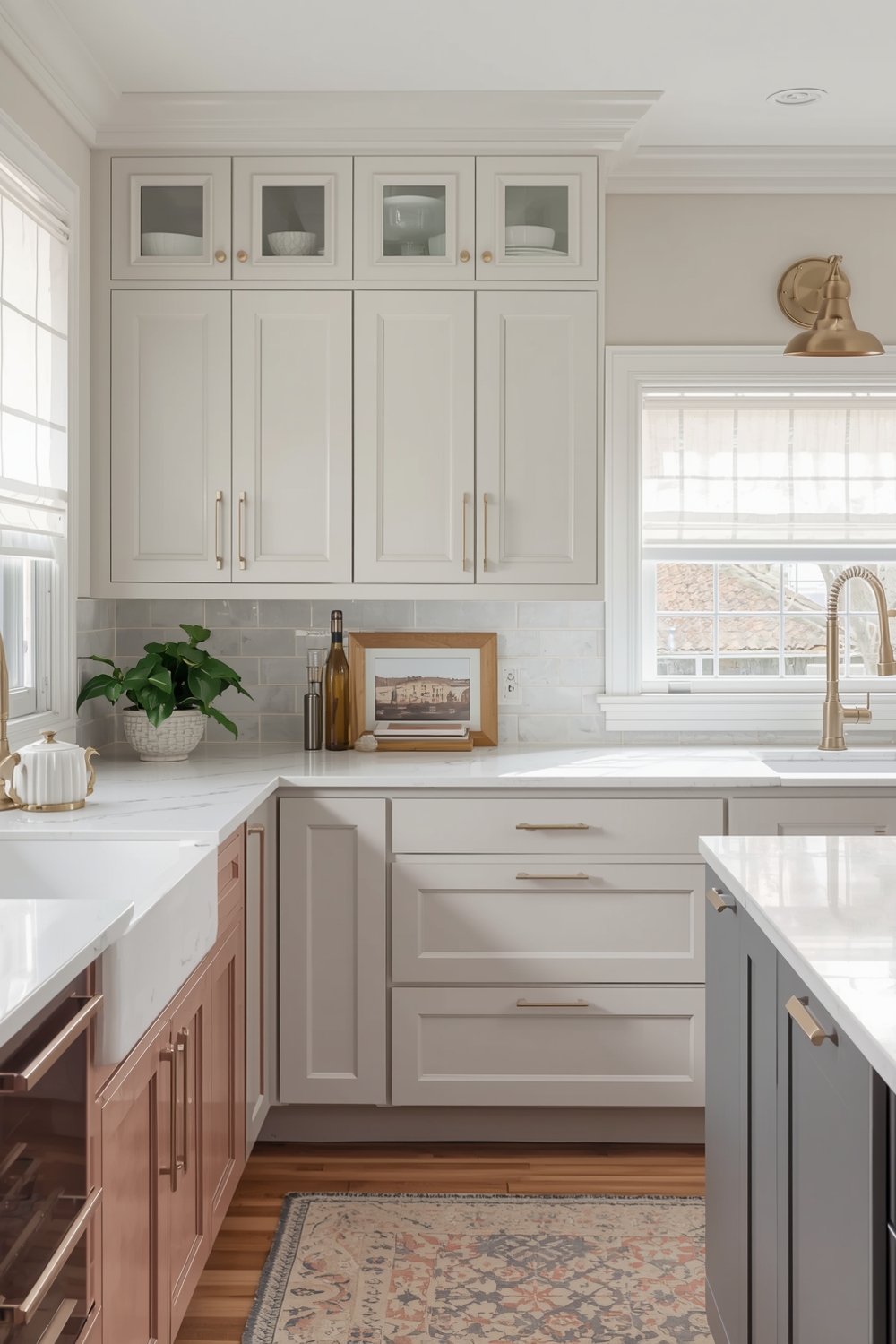
Achieving a crisp, polished two-toned look requires attention to transition points where colors meet. Clean horizontal lines between upper and lower cabinets create the sharpest visual impact, especially when colors contrast significantly. High-gloss finishes on both cabinet colors reflect light beautifully and enhance the crisp aesthetic, though they require more maintenance. For those preferring lower maintenance, matte finishes still deliver clean lines while hiding fingerprints more effectively. The key to crisp two-tone kitchen cabinets lies in precise installation and quality paint application. Professional finishing ensures color edges remain sharp and the overall effect looks intentional rather than haphazard, elevating the entire kitchen design.
Modern Two-Toned Kitchen Decor Themes
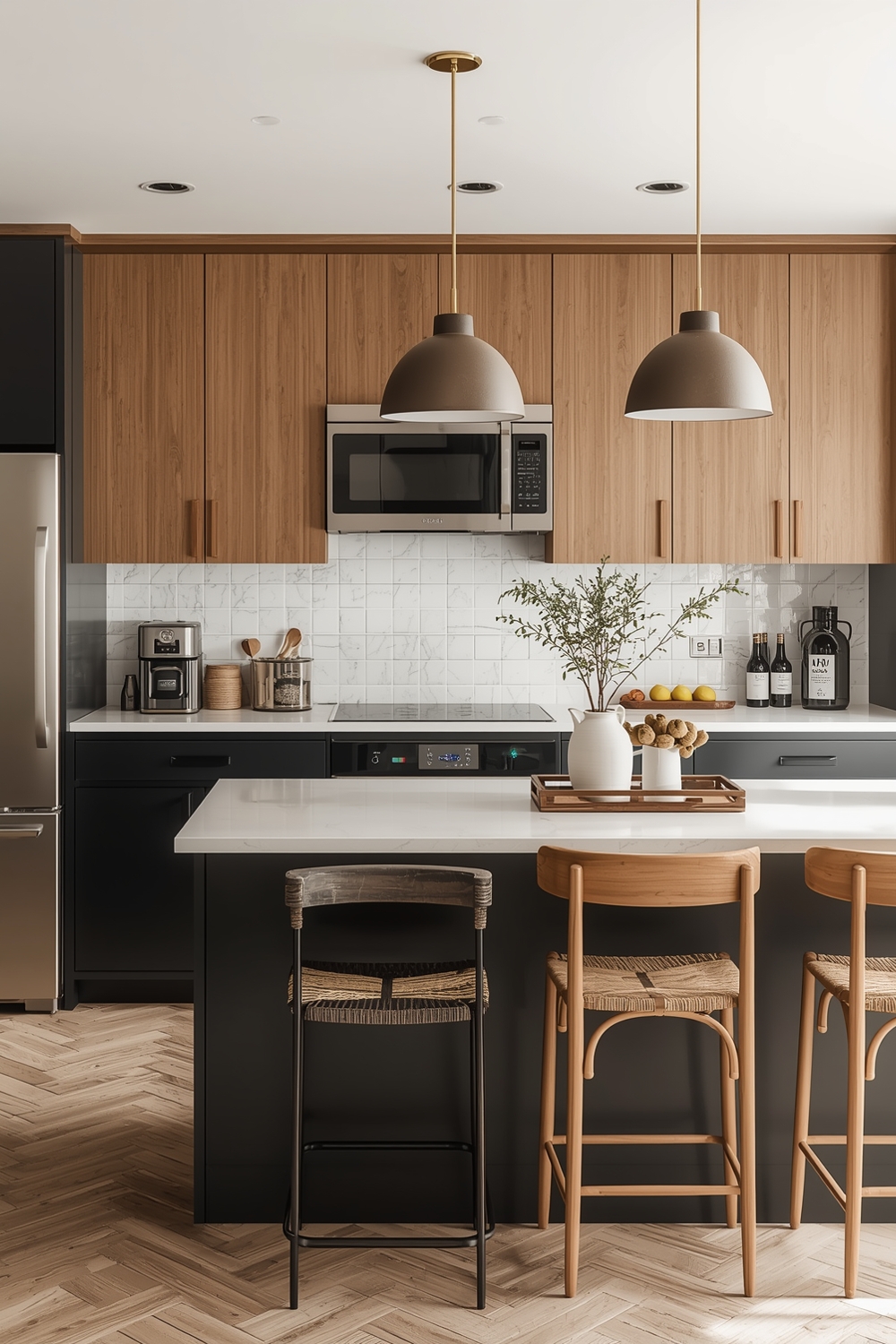
Modern kitchens embrace minimalism, and two-toned cabinets provide visual interest within restrained color palettes. Monochromatic schemes like charcoal paired with light gray create sophisticated depth without introducing multiple hues. Geometric tile backsplashes complement modern two-toned cabinets by echoing the linear color transitions. The two tone kitchen cabinets serve as the foundation while backsplash patterns add movement and personality. Handleless cabinet designs with push-to-open mechanisms enhance the sleek modern aesthetic, allowing the color blocking to take center stage without hardware interruption.
Two-Toned Cabinets with Chic Organizer Features
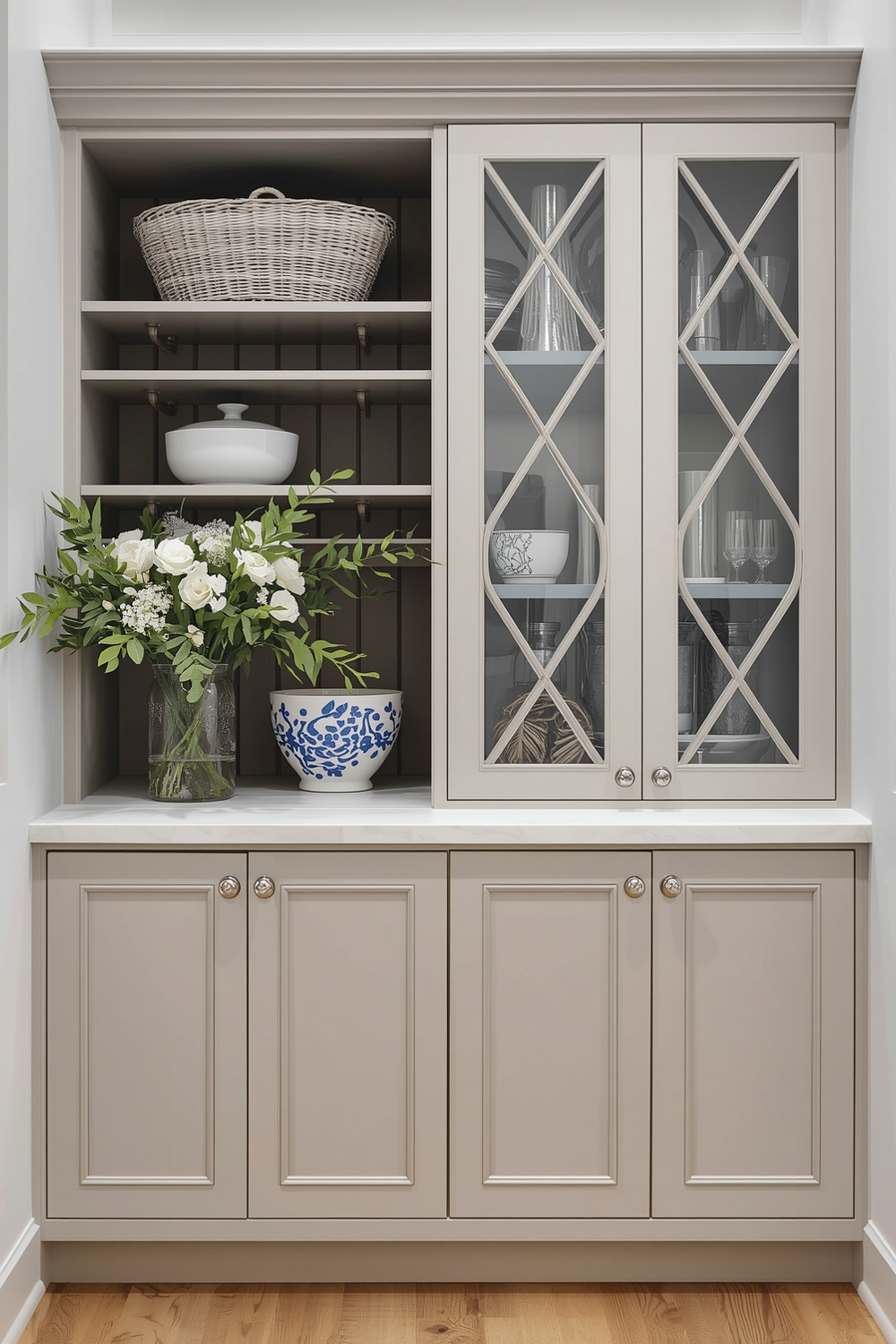
Internal cabinet organization becomes even more important with two-toned designs, as opened cabinets reveal their contents more noticeably. Installing matching organizer systems in both cabinet colors creates cohesion and functionality. Pull-out spice racks, trash bin systems, and drawer dividers in coordinating finishes ensure the interior matches the exterior’s polish. This attention to detail makes the two-toned kitchen cabinet color scheme feel thoroughly considered rather than surface-level. Glass-front uppers in your lighter cabinet color showcase organized dishware while maintaining the two-toned effect, adding both practical storage and decorative display opportunities.
Two-Toned Kitchen Cabinet Artistic Element Ideas
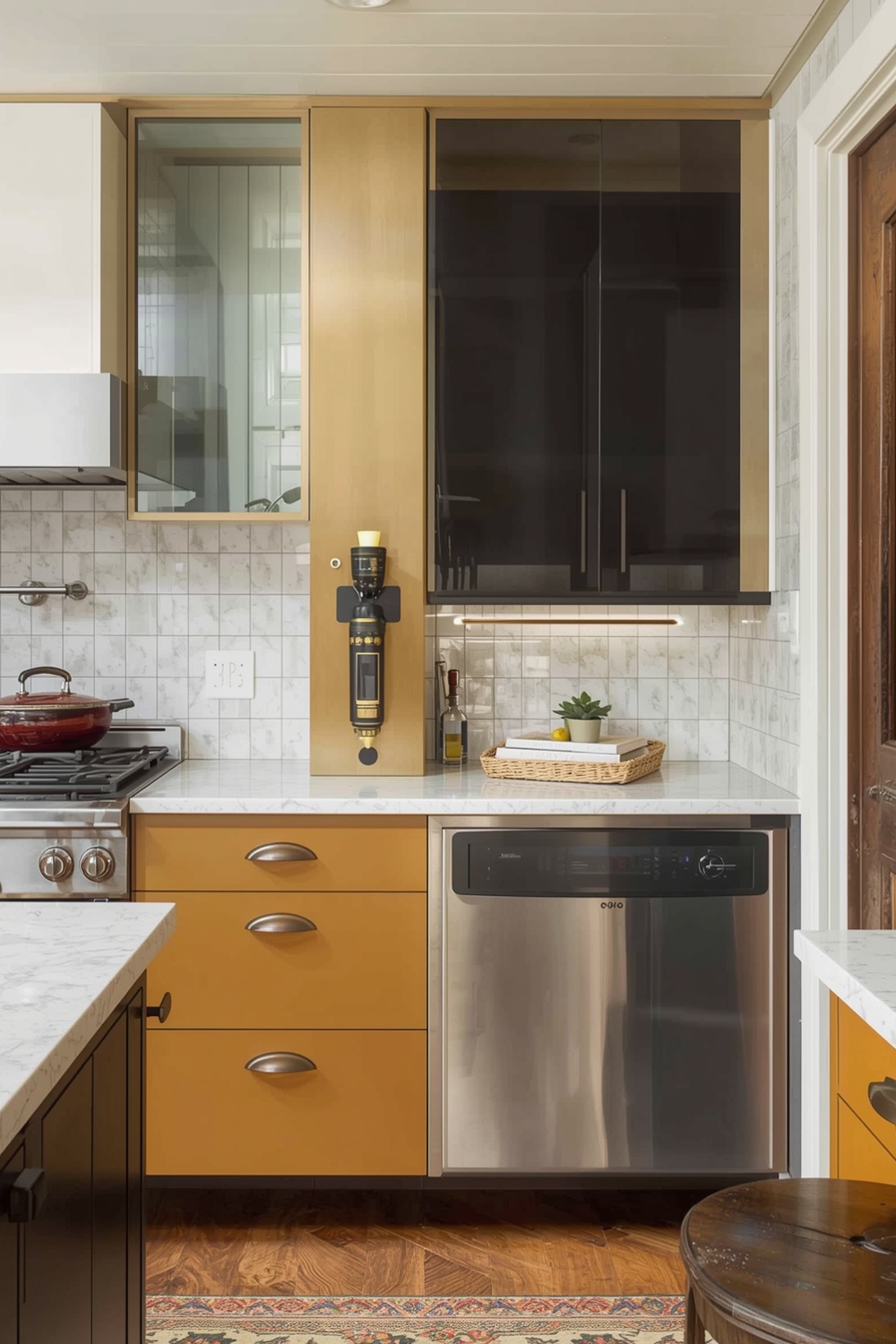
Treating your two-toned cabinets as an artistic canvas opens creative possibilities beyond standard color blocking. Consider diagonal transitions instead of horizontal, creating dynamic movement that challenges conventional design. Cabinet door styles can also vary between your two colors—shaker style on lowers with flat-panel uppers adds textural variation to the color contrast. The two tone kitchen cabinets become sculptural elements that transform the kitchen into a gallery-worthy space. Incorporating one cabinet in an unexpected location with a third accent color—like a pantry door in brass or copper metallic—introduces an artistic surprise that delights without overwhelming the primary two-toned scheme.
How This Idea Improves Your Space
Two-toned kitchen cabinets fundamentally improve your space by adding depth, dimension, and personality that single-color schemes cannot achieve. The strategic use of color creates visual zones that organize the kitchen functionally while enhancing aesthetic appeal. This approach allows you to balance trends with timelessness, incorporating fashionable colors in one cabinet section while keeping the other neutral and enduring. The result is a kitchen that feels both current and classic, increasing your home’s value while reflecting your personal style preferences.
Budget-Friendly Tips
You don’t need to replace all cabinets to achieve a two-toned look. Paint existing lower cabinets while keeping original wood uppers, or refinish just the island in a contrasting color. DIY painting saves significantly compared to professional refinishing, though proper prep work ensures lasting results.
Conclusion
The versatility of two-toned kitchen cabinet color combinations offers something for every style preference and spatial challenge. From bold contemporary contrasts to subtle country-inspired palettes, this design approach transforms ordinary kitchens into extraordinary spaces. By thoughtfully selecting complementary colors and considering how they interact with lighting, hardware, and countertops, you’ll create a kitchen that’s both functional and beautiful for years to come.
FAQs
What are the most popular two-toned kitchen cabinet color combinations? White uppers with navy or gray lowers remain the most popular, followed by natural wood paired with white, and cream combined with sage green. Should upper or lower cabinets be darker in a two-toned kitchen? Dark lower cabinets with light uppers is most common as it grounds the space and hides wear while keeping the room bright, but the reverse can work in well-lit kitchens. How do I choose hardware for two-toned cabinets? Match hardware finish to your dominant cabinet color, use different finishes for each color, or select a neutral metallic like brushed nickel that complements both. Can I do two-toned cabinets in a small kitchen? Yes, keeping uppers light and adding color only to lowers or the island prevents overwhelming small spaces while still providing visual interest. What’s the best way to transition between two cabinet colors? The most common transition is horizontal between upper and lower cabinets, though vertical transitions at corners or between zones also work effectively.